
 English
 中文简体
中文简体Gear & Shaft Manufacturing
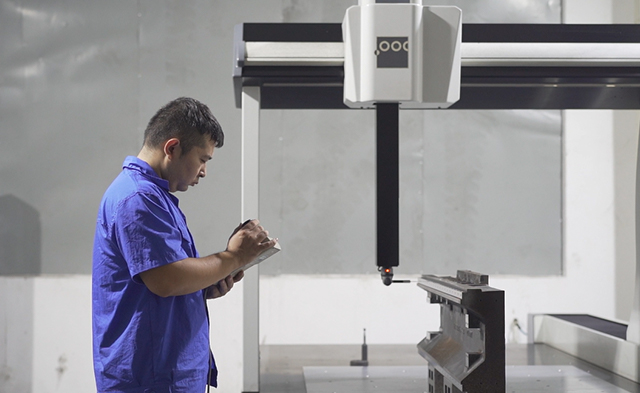
Process: material inspection → blank turning → rough/finish machining (hobbing/shaping/grinding) → precision grinding/gear finishing → surface treatment → final inspection. Capability: high-precision gear machining and flexible machining centers produce gearings routinely meeting ISO Grade 4 accuracy. Advantages: multi-operation integration and tooling control reduce profile error and thermal distortion; flexible lines support small-batch and multi-spec custom orders.
Heat treatment
Process type: Carburizing and quenching + tempering / Other surface hardening processes (selected according to product requirements). Equipment and Control: Utilizing multi-zone temperature control for multi-purpose furnaces and strict management of the quenching medium, it achieves uniform carburized layers and controllable quenching hardness. Indicators and Quality Assurance: The surface hardness, carburizing depth, core toughness, etc. have all undergone hardness testing and metallographic inspection before leaving the factory, ensuring the wear resistance of the tooth surface and the fatigue resistance of the tooth root. Advantage: The highly stable heat treatment significantly enhances the wear resistance and fatigue life of the gears, which is a crucial factor for the long-term reliable operation of large and heavy-duty reducers.
Gearbox Housing & Large Component Machining
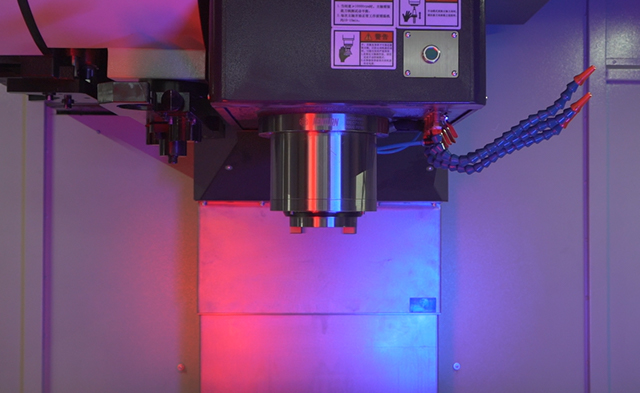
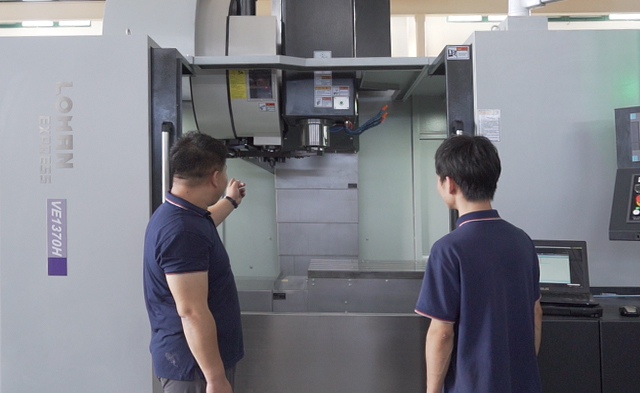
The processing procedure includes rough machining of castings, CNC rough and finish milling, precision boring, and assembly positioning hole machining. Key Points: High-rigidity machine tools and fixture design ensure housing flatness, coaxiality, and installation accuracy, reducing assembly stress and improving operational stability. Surface Treatment: Lost foam casting combined with precision machining improves surface finish and dimensional consistency of the gearbox housing.
Thermal balance, dynamic balance and noise control
Before and after assembly, each rotating component undergoes rotor dynamic balance testing and noise vibration analysis. By optimizing tooth profile trimming, fit clearance and lubrication design, noise is suppressed at the source and transmission efficiency is improved. Result: Ensure no abnormal vibration or noise during the operation of the entire machine, and adapt to applications that are sensitive to noise (such as wind power, precision manufacturing, etc.).
Assembly and Sealing
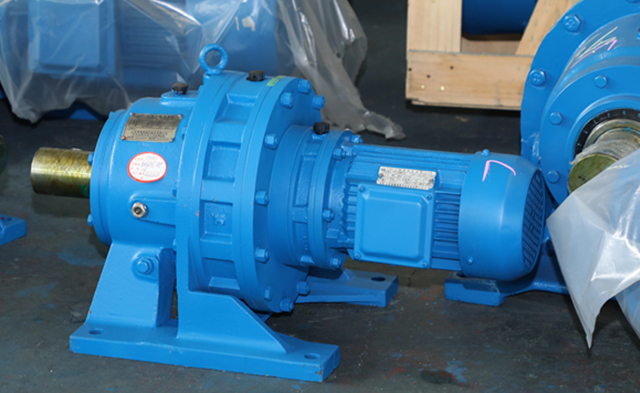
Assembly is carried out in accordance with standard operating procedures (SOP) and torque/gap control; strict sealing and leak prevention measures are adopted at key joints. The component management and assembly traceability system ensures that the source of parts and the assembly process of each product can be traced.

Contact us
-
Factory Address
No. 10, Taiyao North Road, Yaowang Town, Taixing City, Jiangsu Province, China
-
Phone
86-139 5115 9007
Copyright © TAIXING REDUCER CO., LTD. Rights Reserved.
China industrial gear reducer manufacturer Custom speed reducer supplier