 English
 中文简体
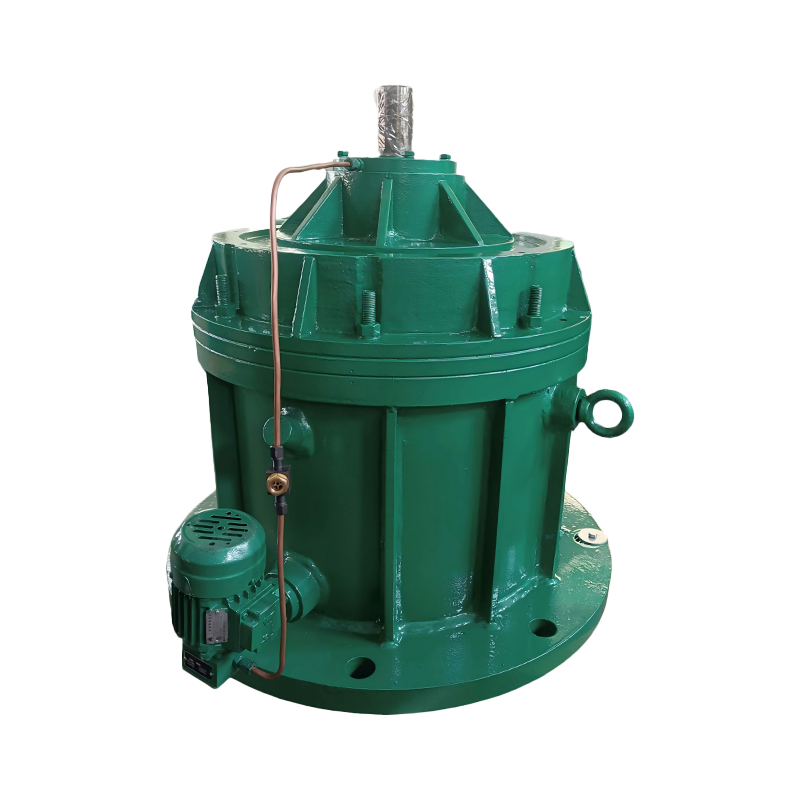
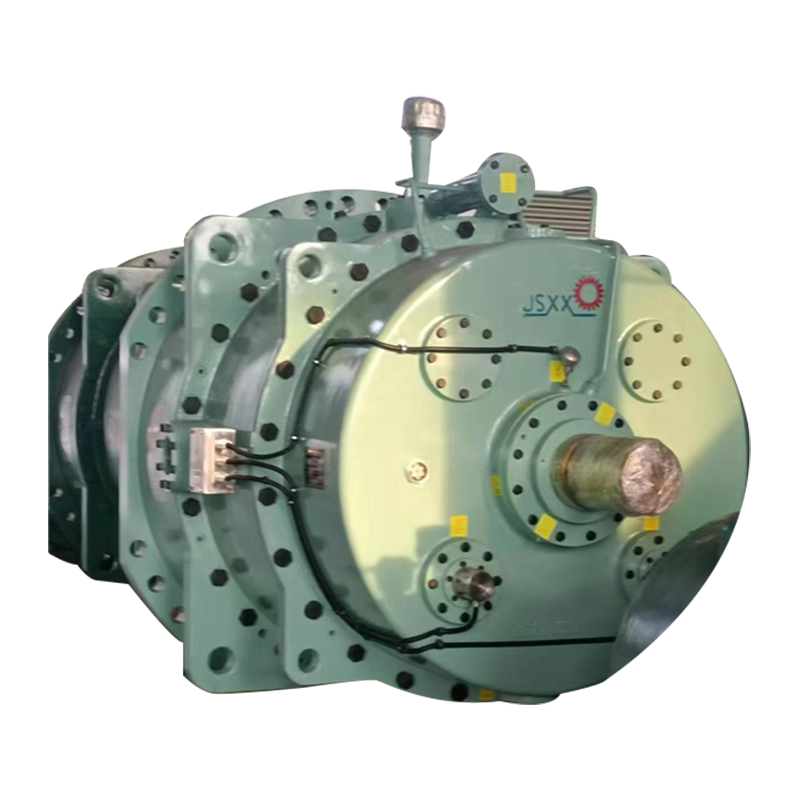
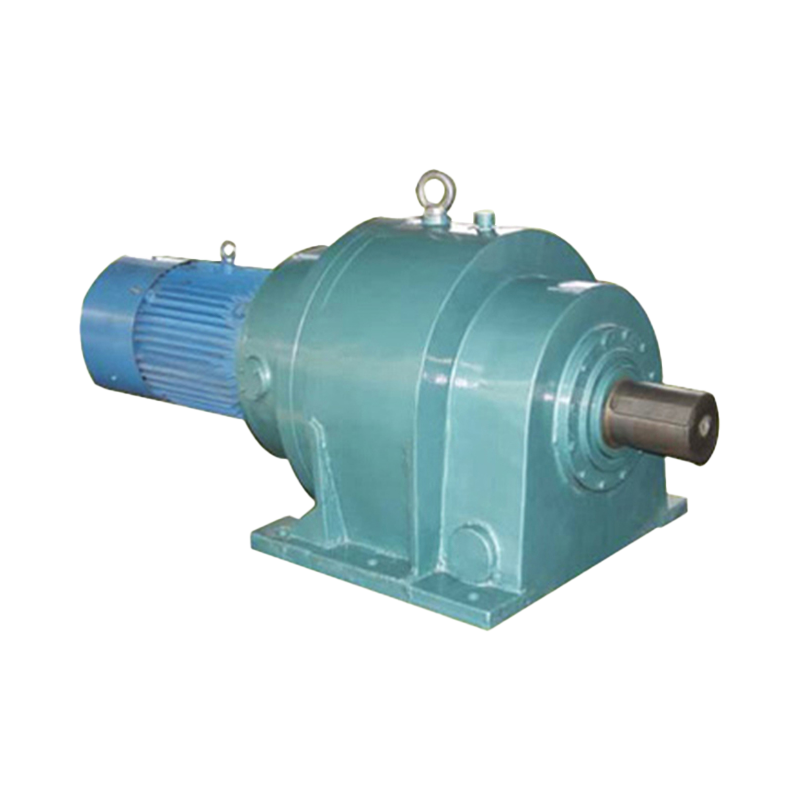
中文简体A planetary gear reducer — also called an epicyclic gear reducer — is a compact, high-efficiency mechanical transmission device that uses a system of sun gear, planet gears, ring gear, and carrier to reduce rotational speed and multiply torque. It is widely used in robotics, industrial automation, wind turbines, electric vehicles, and precision machinery where high torque density and low backlash are essential.
Content
- 1 How Does a Planetary Gear Reducer Work?
- 2 Key Technical Specifications of Planetary Gear Reducers
- 3 Planetary Gear Reducer vs. Other Gear Reducer Types
- 4 Types of Planetary Gear Reducers
- 5 Advantages of Planetary Gear Reducers
- 6 Limitations and Disadvantages
- 7 Key Applications of Planetary Gear Reducers
- 8 How to Select the Right Planetary Gear Reducer
- 9 Maintenance and Service Life of Planetary Gear Reducers
- 10 Frequently Asked Questions (FAQ)
- 10.1 Q1: What is the difference between a planetary gear reducer and a planetary gearbox?
- 10.2 Q2: What gear ratios are achievable with a single-stage planetary gear reducer?
- 10.3 Q3: How does backlash affect performance, and can it be reduced to zero?
- 10.4 Q4: Can a planetary gear reducer be back-driven?
- 10.5 Q5: How is the efficiency of a planetary gear reducer calculated?
- 10.6 Q6: What is the typical service life of a planetary gear reducer?
- 10.7 Q7: Are planetary gear reducers suitable for food and beverage applications?
- 11 Conclusion
How Does a Planetary Gear Reducer Work?
A planetary gear reducer transfers power through simultaneous meshing of multiple planet gears around a central sun gear, all contained within an outer ring gear. This simultaneous load sharing is the core reason for its exceptional torque-to-size ratio.
The four main components work as follows:
- Sun Gear: Located at the center; receives input from the motor shaft and drives the planet gears.
- Planet Gears: Typically 3–5 gears mounted on the carrier; they rotate around the sun gear and mesh with the ring gear simultaneously.
- Ring Gear (Annulus): The outer internally-toothed gear, usually fixed to the housing. Its tooth count determines the gear ratio.
- Planet Carrier: The output shaft assembly that holds the planet gears. As planets orbit the sun gear, the carrier rotates at reduced speed.
The basic gear ratio formula for a fixed ring gear configuration is:
Gear Ratio (i) = 1 + (Zring / Zsun)
For example, if the ring gear has 72 teeth and the sun gear has 24 teeth, the ratio is 1 + (72/24) = 4:1. This means the output shaft rotates at one-quarter the input speed, with four times the torque (minus efficiency losses).
Key Technical Specifications of Planetary Gear Reducers
Understanding the core parameters helps engineers select the right reducer for their application. The table below summarizes typical performance benchmarks for industrial-grade planetary gear reducers:
| Parameter | Single Stage | Two Stage | Three Stage |
|---|---|---|---|
| Gear Ratio Range | 3:1 – 10:1 | 9:1 – 100:1 | 27:1 – 1000:1 |
| Typical Efficiency | 96% – 99% | 92% – 97% | 88% – 94% |
| Backlash (arcmin) | < 3 arcmin | < 5 arcmin | < 7 arcmin |
| Input Speed (max) | Up to 6,000 RPM | Up to 5,000 RPM | Up to 4,000 RPM |
| Power Density | Very High | High | Medium-High |
Table 1: Comparative technical specifications of planetary gear reducers by stage count. Data compiled from ISO 6336 and industry standard catalogs.
Planetary Gear Reducer vs. Other Gear Reducer Types
The planetary gear reducer outperforms most competing designs in torque density and coaxial compactness, making it the preferred choice across high-performance industries. Here is a direct comparison:
| Reducer Type | Efficiency | Torque Density | Backlash | Size / Weight | Cost | Best For |
|---|---|---|---|---|---|---|
| Planetary | 96–99% | Very High | Very Low | Very Compact | Medium–High | Robotics, EV, CNC |
| Spur / Helical | 95–98% | Medium | Medium | Larger footprint | Low–Medium | General machinery |
| Worm Gear | 50–90% | Medium | Low–Medium | Compact (90° axis) | Low | Conveyors, lifts |
| Harmonic Drive | 80–90% | High | Near Zero | Ultra Compact | Very High | Aerospace, robotics |
| Cycloidal | 93–97% | High | Low | Compact | High | High shock loads |
Table 2: Comparative overview of common industrial gear reducer types. Efficiency figures are based on single-stage performance data from IEEE Transactions on Industrial Electronics and manufacturer datasheets.
The worm gear reducer, despite its low cost, suffers from efficiency penalties of up to 50% at high reduction ratios — a critical disadvantage compared to the planetary gear reducer's consistent 96–99% single-stage efficiency. According to a 2022 industry analysis by Mordor Intelligence, planetary gear reducers account for approximately 38% of the global precision gear market, driven largely by growth in collaborative robots and EV drivetrains.
Types of Planetary Gear Reducers
Not all planetary gear reducers share the same architecture. Engineers must choose the right variant based on load profile, ratio requirements, and environment.
1. Standard (Inline) Planetary Gear Reducer
The input and output shafts share the same axis of rotation. This coaxial design is the most common configuration, providing torque output in the range of 10 Nm to over 100,000 Nm depending on size. It is the standard choice for servo motor integration in CNC machines and automated assembly lines.
2. Right-Angle Planetary Gear Reducer
A bevel gear set converts the input to a 90-degree axis before entering the planetary stage. This configuration is favored in conveyor systems and packaging machinery where space constraints require perpendicular shaft arrangements. Efficiency is typically 2–4% lower than inline designs due to the added bevel stage.
3. Hollow-Shaft Planetary Gear Reducer
The output shaft is hollow, allowing cables, pipes, or a through-shaft to pass directly through the center of the reducer. This design is extensively used in rotary tables, robotic joints, and indexing systems. It simplifies machine design by eliminating external cable routing and reducing the risk of cable damage.
4. High-Precision (Backlash-Free) Planetary Gear Reducer
Precision-ground helical planet gears and pre-loaded bearings achieve backlash below 1 arcminute. These units command a price premium — typically 3–6 times the cost of standard models — but are essential in applications such as semiconductor wafer handling, medical imaging equipment, and 5-axis machining centers, where positional accuracy tolerances are sub-micron.
5. Multi-Stage Planetary Gear Reducer
By stacking two or three planetary stages in series, gear ratios of 1,000:1 or higher are achievable in a single compact housing. Each additional stage reduces efficiency by approximately 2–4% but allows one unit to replace what would otherwise require multiple gearbox stages or a worm/helical combination. Wind turbines, for example, use two-stage or three-stage planetary gearboxes to step up generator input speed from approximately 15–25 RPM (rotor speed) to 1,200–1,800 RPM.
Advantages of Planetary Gear Reducers
Planetary gear reducers offer a combination of performance characteristics that no single competing technology can fully replicate:
- High Torque Density: Because load is shared across 3–5 planet gears simultaneously, a planetary gear reducer can transmit up to 3–5 times more torque per unit volume compared to a spur gear reducer of the same diameter. A 90mm flange-size unit can achieve rated output torques exceeding 400 Nm in some designs.
- High Efficiency: With single-stage efficiency of 96–99%, planetary gear reducers lose minimal power to heat, reducing thermal management costs in continuous-duty applications. By contrast, worm gear reducers at high ratios can drop to 50–60% efficiency, significantly increasing energy consumption.
- Coaxial Input/Output: The input and output on the same axis simplifies machine design and reduces the need for couplings, alignment components, and extended housing structures.
- Low Backlash: Precision planetary gear reducers achieve backlash figures below 3 arcmin, and high-precision variants below 1 arcmin — critical for position-controlled servo drives in robotics and CNC.
- High Rigidity: The distributed load path creates high torsional stiffness, enabling better dynamic response in servo applications. Torsional stiffness values of 10–30 Nm/arcmin are common in 60–90mm flange sizes.
- Long Service Life: Properly lubricated planetary gear reducers are rated for 20,000+ hours of operation under rated loads, comparable to the service life of the motors they are paired with.
Limitations and Disadvantages
Despite its strengths, the planetary gear reducer has specific limitations that engineers must account for during system design:
- Manufacturing Complexity: Achieving precise tooth geometry and concentricity across sun, planet, and ring gears requires tight tolerances, contributing to higher manufacturing costs compared to simple spur or helical gearboxes.
- Limited Ratio per Stage: A single planetary stage typically provides ratios of 3:1 to 10:1. Higher ratios require multiple stages, each adding cost, complexity, and a small efficiency penalty.
- Lubrication Requirements: Planetary gear reducers require clean, correctly viscosified lubricant. Contaminated or degraded oil significantly accelerates wear on carrier bearings and gear tooth flanks. Re-greasing intervals are typically 5,000–10,000 hours depending on duty cycle and load.
- Noise and Vibration: At high input speeds (above 3,000 RPM), planet gear mesh frequency can generate audible noise and vibration. Helical-tooth planet gears reduce this, but at increased axial load on bearings.
Key Applications of Planetary Gear Reducers
Planetary gear reducers are found wherever high torque, precision, and compact design are simultaneously required. The following are the primary industrial applications:
Robotics and Collaborative Robots (Cobots)
Each joint of a 6-axis industrial robot typically incorporates a planetary or cycloidal gear reducer to convert high-speed servo motor output into the high-torque, low-speed rotation needed for arm movement. Backlash is a critical parameter here — backlash of more than 5 arcmin can translate to positional errors of 0.1–0.3 mm at the end-effector, which is unacceptable for welding or assembly tasks. The global collaborative robot market was valued at approximately USD 1.5 billion in 2023 (Source: MarketsandMarkets Research), and planetary gear reducers are integral to virtually every joint actuation design.
Electric Vehicles and e-Drives
Single-speed EV drivetrains frequently incorporate a one- or two-stage planetary gear reducer between the motor and drive axle. Because EV motors produce peak torques of 200–400 Nm at very low RPM, the reducer's primary function shifts from torque multiplication to speed adaptation. A typical gear ratio of 9:1 to 12:1 allows motor operation in its efficiency sweet spot (4,000–10,000 RPM), extending battery range. In-wheel motor designs use epicyclic reducers integrated directly into the wheel hub.
Wind Turbines
Large multi-megawatt wind turbines use compound planetary gearboxes to achieve overall ratios of 100:1 to 130:1. A 3 MW turbine operating at a rotor speed of 13–14 RPM requires its gearbox to output approximately 1,500 RPM to the generator. These gearboxes handle instantaneous torques exceeding 3 million Nm under gusty wind conditions, making structural integrity and fatigue life the dominant design drivers.
CNC Machine Tools
Rotary tables, tool changers, and feed axes in CNC machining centers rely on planetary gear reducers for high torsional stiffness and repeatable positioning. A typical rotary table application requires a reducer with torsional stiffness above 20 Nm/arcmin and a service life exceeding 30,000 hours at cyclic loads — requirements that favor precision planetary designs with carburized and ground gears.
Printing and Packaging Machinery
High-speed printing presses and form-fill-seal packaging machines require reducers that maintain synchronization across multiple axes at cycle rates above 200 strokes per minute. Planetary gear reducers with helical gears and optimized planet carrier geometry achieve the required low noise levels (below 65 dB at 1 m) and long service intervals in these continuous-production environments.
How to Select the Right Planetary Gear Reducer
Proper selection is critical to achieving target performance and service life. Engineers should follow this structured process:
| Selection Step | Key Parameter | Typical Check |
|---|---|---|
| 1. Define gear ratio | Required output speed vs motor speed | i = n_motor / n_output |
| 2. Calculate output torque | Load torque × service factor | T_rated > T_load × SF (SF = 1.2–2.0) |
| 3. Check backlash | Application positional accuracy | Standard: <5 arcmin / Precision: <1 arcmin |
| 4. Verify torsional stiffness | Dynamic response / settling time | Higher Nm/arcmin = faster settling |
| 5. Confirm input interface | Motor flange and shaft dimensions | IEC, NEMA, or custom adapter |
| 6. Assess environment | IP rating, temperature, wash-down | Food-grade: IP67+, NSF-H1 lubricant |
Table 3: Six-step selection checklist for planetary gear reducers. Service factors (SF) are defined in AGMA 9005-F16 and ISO 6336.
A common sizing mistake is to select a reducer based solely on rated output torque while ignoring the emergency stop torque. During E-stop conditions, peak decelerating torques can reach 3–5 times the nominal running torque. The reducer's maximum permissible torque (T_max) — typically 2–3 times rated torque for standard units — must exceed this peak value to prevent tooth fracture or carrier bearing failure.
Maintenance and Service Life of Planetary Gear Reducers
Planetary gear reducers are inherently low-maintenance when operated within rated parameters, but adherence to a few key practices dramatically extends service life.
- Lubrication: Factory-sealed grease-lubricated units (most flange sizes below 120 mm) require no re-lubrication until overhaul. Oil-lubricated industrial units should have oil analyzed every 2,000–3,000 hours; full oil changes are recommended every 8,000–10,000 hours or annually, whichever comes first. Using synthetic PAO-based gear oil (ISO VG 150 or 220) instead of mineral oil extends re-lubrication intervals by 40–60% according to field data from major gearbox manufacturers.
- Contamination Control: Ingress of moisture or metallic particles from the driven load accelerates abrasive wear. Specifying IP54 as a minimum protection class for indoor industrial environments, or IP65–IP67 for washdown or outdoor duty, is strongly recommended.
- Alignment: Excessive radial or axial loads from misaligned couplings shorten carrier bearing life. Follow manufacturer limits on permissible radial (F_r) and axial (F_a) forces at the output shaft. Typical limits for a 90 mm flange unit are F_r = 2,500–5,000 N and F_a = 1,500–3,000 N depending on mounting position.
- Operating Temperature: Standard planetary gear reducers are rated for ambient temperatures of -10°C to +40°C. For arctic or high-temperature environments, specify appropriate low-pour-point or high-viscosity lubricants respectively.
Frequently Asked Questions (FAQ)
Q1: What is the difference between a planetary gear reducer and a planetary gearbox?
The terms are functionally interchangeable in most industry usage. "Planetary gear reducer" emphasizes the speed-reduction function; "planetary gearbox" refers to the complete housing and gear assembly. Some engineers use "epicyclic gearbox" as the technically precise term covering both speed reduction and overdrive configurations.
Q2: What gear ratios are achievable with a single-stage planetary gear reducer?
A single-stage planetary gear reducer typically delivers ratios between 3:1 and 10:1. The practical lower limit is set by the minimum number of teeth on the sun gear (to avoid undercutting), and the upper limit by the maximum ring-to-sun tooth count ratio before the planet gears become too small to carry load. For ratios above 10:1, two or more stages are used.
Q3: How does backlash affect performance, and can it be reduced to zero?
Backlash causes positional deadband — a zone of input motion that produces no output movement — which directly limits axis positioning accuracy and introduces phase lag in closed-loop servo control. True zero backlash is achieved by spring preloading or split-gear designs, but at the cost of increased tooth wear, higher drag torque, and reduced efficiency. Most precision applications target 1–3 arcmin as the optimal balance between accuracy and durability.
Q4: Can a planetary gear reducer be back-driven?
Yes. Unlike worm gear reducers (which self-lock at ratios above approximately 20:1 due to high friction angles), planetary gear reducers are highly efficient in both directions and can be back-driven by a load applied to the output shaft. This is an important characteristic to account for in vertical-axis applications, where a brake or counterbalance may be needed to hold position under gravity when the motor is de-energized.
Q5: How is the efficiency of a planetary gear reducer calculated?
The overall efficiency is calculated as: Efficiency (%) = (P_output / P_input) × 100. In practice, losses arise from gear mesh sliding friction, bearing drag, and seal drag. For a 3-planet, spur-tooth, single-stage unit with precision bearings, typical mesh efficiency per stage is 98–99%. Adding rolling element bearing losses and seal friction brings overall single-stage efficiency to 96–99%.
Q6: What is the typical service life of a planetary gear reducer?
Industrial planetary gear reducers are designed for L10 bearing life (the time at which 10% of a population of bearings would fail) of 20,000–30,000 hours at rated load and speed. At 50% of rated load, service life increases by a factor of 8 according to ISO 281 bearing life calculations, meaning a unit rated for 20,000 hours at full load may last 160,000 hours at half load — effectively the life of the machine.
Q7: Are planetary gear reducers suitable for food and beverage applications?
Yes, provided the correct specification is chosen. Food-grade planetary gear reducers must use NSF H1-certified lubricants, stainless steel or nickel-plated housings, and IP65 or higher protection ratings to withstand high-pressure washdown. Many manufacturers offer dedicated hygienic-design variants with smooth external surfaces to prevent bacterial harboring.
Conclusion
The planetary gear reducer is one of the most versatile and efficient power transmission components in modern mechanical engineering. Its combination of high torque density, compact coaxial design, low backlash, and excellent efficiency — typically 96–99% per stage — makes it the dominant choice in robotics, electric vehicle drivetrains, wind energy, precision CNC machining, and industrial automation. Understanding its operating principles, variant types, selection criteria, and maintenance requirements enables engineers to specify the right unit with confidence, maximizing both machine performance and total cost of ownership across the full service life.
As industrial demand for precise, energy-efficient motion control continues to accelerate — the global precision gearbox market is projected to exceed USD 4.2 billion by 2028 according to Grand View Research — the planetary gear reducer will remain a foundational technology at the heart of the machines that move the modern world.