 English
 中文简体
中文简体A worm gear reducer works by meshing a helical worm shaft against a worm wheel at a 90-degree angle, converting high-speed, low-torque input from a motor into low-speed, high-torque output through a sliding engagement that simultaneously enables gear ratios from 5:1 to over 300:1 in a single compact stage. This unique combination of extreme ratio range, inherent self-locking capability, right-angle power transmission, and quiet operation makes worm gear reducers one of the most widely deployed speed-reduction solutions in conveyors, hoisting equipment, packaging machinery, and dozens of other industrial applications worldwide.
Content
- 1 What Is a Worm Gear Reducer?
- 2 How Does a Worm Gear Reducer Work Step by Step?
- 3 Which Types of Worm Gear Reducers Are Available?
- 4 What Materials Are Worm Gear Reducers Made From?
- 5 How Efficient Are Worm Gear Reducers? Real Data by Ratio
- 6 Worm Gear Reducers vs. Other Right-Angle Gear Types
- 7 Where Are Worm Gear Reducers Used? Key Industrial Applications
- 8 How to Select the Right Worm Gear Reducer
- 9 Lubrication and Maintenance Best Practices
- 10 Frequently Asked Questions About Worm Gear Reducers
- 10.1 Q: What makes a worm gear reducer self-locking, and is self-locking always desirable?
- 10.2 Q: Why do worm gear reducers get hot, and at what temperature is this a problem?
- 10.3 Q: Can a worm gear reducer be mounted in any orientation?
- 10.4 Q: How does a double-reduction worm gear reducer differ from a single-reduction unit?
- 10.5 Q: What is the typical service life of a worm gear reducer?
- 10.6 Q: Are worm gear reducers still relevant when helical-bevel units are more efficient?
- 11 Summary
What Is a Worm Gear Reducer?
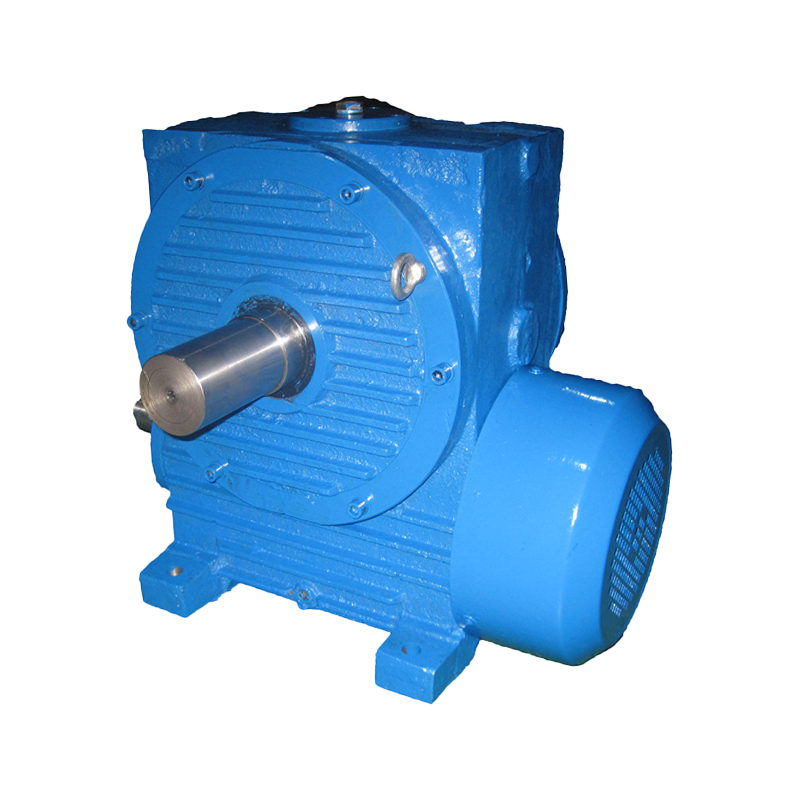
A worm gear reducer is a mechanical power-transmission device consisting of two primary components — a worm (resembling a threaded screw) and a worm wheel (a gear with specially shaped teeth) — where the worm's helical threads engage the wheel's teeth to reduce rotational speed and multiply output torque. These devices are also called worm gear drives, worm gearboxes, or worm speed reducers, and they are a member of the broader right-angle gear reducer family alongside helical-bevel, helical-hypoid, and helical-worm designs.
The concept traces back centuries, with worm gearing appearing in early mill machinery and siege equipment, but the modern precision-machined form became standard with the industrialization of the 19th century. Today, according to Machine Design, worm gear reducers are among the most widely used right-angle speed reducers in industry, valued for their compactness, high single-stage ratio capability, and mechanical simplicity.
How Does a Worm Gear Reducer Work Step by Step?
A worm gear reducer operates through continuous sliding-gear action: the motor drives the worm shaft, whose threads slide along the teeth of the worm wheel, forcing the wheel to rotate slowly and at greatly amplified torque while the worm-and-wheel axes remain perpendicular throughout the entire power transfer. According to IBT Industrial Solutions, this sliding contact produces a large engagement area that yields smooth, quiet operation — but also generates friction that is the primary source of energy loss in the system.
- Motor drives the worm shaft. An electric motor connects directly to the worm shaft (input shaft), spinning it at rated speed — typically 1,450–1,750 rpm in standard industrial applications.
- Worm threads engage the worm wheel. Each revolution of the worm advances the worm wheel by exactly the number of worm starts (thread starts). A single-start worm advances the wheel one tooth per revolution; a two-start worm advances it two teeth.
- Speed drops, torque rises. Because the worm must revolve many times to complete one revolution of the worm wheel, output speed is a fraction of input speed while output torque is multiplied by the same ratio, minus friction losses.
- Output shaft delivers reduced-speed, high-torque motion. The worm wheel is mounted on the output shaft, which exits the gearbox at 90° to the worm shaft, ready to drive a conveyor belt, elevator screw, or other load.
- Self-locking prevents back-driving (at low lead angles). When the lead angle of the worm is smaller than the friction angle between worm and wheel surfaces, the mechanism self-locks — the load cannot spin the wheel back through the worm — a critical safety feature in hoisting applications.
The Gear Ratio Formula
The reduction ratio is calculated from a straightforward formula, as documented by Mitsubishi Electric and multiple industry sources:
Reduction Ratio = Number of Teeth on Worm Wheel ÷ Number of Starts on Worm
For example, a worm wheel with 40 teeth driven by a single-start worm produces a 40:1 ratio; the same wheel driven by a two-start worm yields 20:1. According to IBT Industrial Solutions, a worm wheel with 30 teeth and a single-thread worm creates a 30:1 ratio — analogous to a screw advancing one turn of a nut per revolution.
Which Types of Worm Gear Reducers Are Available?
Worm gear reducers are classified by their worm geometry, reduction stages, and output shaft configuration, with cylindrical (standard) worm, double-enveloping worm, and single-/double-reduction arrangements covering the vast majority of industrial use cases.
| Type | Geometry | Typical Ratio Range | Key Advantage | Common Application |
| Standard Cylindrical Worm | Straight cylindrical worm shaft | 5:1 – 100:1 | Simple, cost-effective, widely available | Conveyors, mixers, packaging lines |
| Double-Enveloping (Globoid) Worm | Both worm and wheel concave to each other | 5:1 – 70:1 | Higher contact area; improved efficiency and load capacity | Heavy lifting, presses, mining equipment |
| Single-Reduction Worm | One worm-wheel mesh stage | 5:1 – 100:1 | Compact; efficiency up to 90% at low ratios | General-purpose industrial drives |
| Double-Reduction Worm | Two sequential worm-wheel stages | 100:1 – 3,600:1 | Ultra-high ratios in one compact housing | Slow-speed drives, solar trackers, rotary tables |
| Helical-Worm (Inline + Worm) | Helical pre-stage + worm stage | 5:1 – 300:1 | Higher overall efficiency than pure worm | Agitators, pumps, automated gates |
| Dual-Output Shaft Worm | Output shafts on both sides of the wheel | 10:1 – 60:1 | Synchronized dual-direction power split | Dual-conveyor systems, chain drives |
Table 1: Major types of worm gear reducers classified by worm geometry and reduction stage count, with typical ratio range, key advantage, and representative industrial application. Sources: Machine Design, IBT Industrial Solutions, SGR Heavy Industry.
What Materials Are Worm Gear Reducers Made From?
The most common and effective material pairing is a hardened steel worm driving a bronze worm wheel, a combination specifically chosen to minimise friction, resist adhesive wear from sliding contact, and generate a stable hydrodynamic lubrication film during operation. According to Machine Design, typical worm gear reducers use a hardened steel worm driving a bronze worm gear, and the flanks of the bronze teeth undergo work hardening during the run-in period, which improves the hydrodynamic lubrication film and raises operating efficiency.
- Worm shaft (input): Case-hardened alloy steel, typically ground and polished to a fine surface finish to reduce the friction coefficient at the worm-wheel interface.
- Worm wheel: Fine-grain copper-tin bronze (e.g., CuSn12 alloy) specially alloyed for superior wear resistance and load capacity, as noted by IBT Industrial Solutions.
- Housing: Cast iron for standard applications; die-cast aluminium alloy for lighter-duty and higher-IP-rated units; stainless steel for food processing and washdown environments.
- Advanced coatings: Polyamide (nylon) coatings and Diamond-Like Carbon (DLC) surface treatments are increasingly applied to reduce sliding friction, lower noise, and extend service life, particularly in high-cycle automation drives.
- Bearings: Tapered or cylindrical roller bearings handle the radial and thrust loads generated by worm mesh forces; bearing selection directly affects overall unit efficiency, according to the Machine Design efficiency analysis.
How Efficient Are Worm Gear Reducers? Real Data by Ratio
Worm gear reducer efficiency ranges from approximately 49% at a 300:1 double-reduction ratio up to 90% or higher at a 5:1 single-reduction ratio, according to analysis published by Machine Design — making ratio selection one of the most consequential decisions in any worm gear application.
The efficiency formula at the gear mesh level, as documented by FIRGELLI Engineering, is:
η = tan(λ) / tan(λ + φ)
Where λ is the worm lead angle and φ is the friction angle. A higher lead angle (multi-start worm, lower ratio) increases efficiency; a lower lead angle (single-start, high ratio) improves self-locking but reduces power throughput.
| Reduction Ratio | Typical Efficiency | Self-Locking? | Worm Starts | Typical Use |
| 5:1 – 10:1 | 88 – 95% | No | 4–6 starts | High-speed fans, light conveyors |
| 10:1 – 20:1 | 78 – 90% | Marginal | 2–4 starts | Packaging machines, agitators |
| 20:1 – 50:1 | 60 – 80% | Yes | 1–2 starts | Material handling, hoists |
| 50:1 – 100:1 | 45 – 65% | Yes | 1 start | Lifts, winches, gate drives |
| 100:1 – 300:1 (double-reduction) | 40 – 55% | Yes | 1 start (each stage) | Solar trackers, slow-speed rotary tables |
Table 2: Worm gear reducer efficiency by reduction ratio range, with self-locking status and typical application. Efficiency data sourced from Machine Design and FIRGELLI Engineering efficiency analysis.
Why Run-In Matters for Efficiency
A new worm gear reducer is measurably less efficient than one that has been properly run in. According to Machine Design, the bronze gear teeth on a new worm wheel carry small hobbing facets on their flanks that prevent a full hydrodynamic lubrication film from forming at the standard 1,750 rpm input speed. A run-in period of 10 to 100 hours is typical: during this time, the facets wear smooth, work hardening occurs on the bronze flanks, and sump temperature decreases as the effective oil film improves — all of which raise measured efficiency noticeably above out-of-box values.
Worm Gear Reducers vs. Other Right-Angle Gear Types
Worm gear reducers offer the most compact, cost-effective solution for high single-stage ratios and self-locking applications, but lose their economic advantage to helical-bevel or in-line helical reducers wherever efficiency above 78–80% is the primary selection criterion. The comparison below is derived from data published by Machine Design.
| Reducer Type | Efficiency Range | Ratio Dependency | Cost | Self-Locking | Best At |
| Worm Gear | 49 – 90% | Highly ratio-dependent | Low – moderate | Yes (high ratios) | High ratio, compact 90-degree drives |
| Helical-Bevel | 88 – 96% | Low ratio dependency | High | No | Energy efficiency priority |
| Helical-Hypoid | 85 – 94% | Moderate | High | No | High speed, moderate ratio |
| In-Line Helical | 95 – 98% | Minimal | Moderate | No | Highest efficiency, in-line shaft layout |
| Helical-Worm | 79 – 90% | Lower than pure worm | Moderate | Partial | Efficiency-ratio balance |
Table 3: Comparison of common industrial right-angle and in-line gear reducer types by efficiency range, cost, self-locking capability, and best application. Data sourced from Machine Design efficiency analysis.
Where Are Worm Gear Reducers Used? Key Industrial Applications
Worm gear reducers are deployed in any application requiring high torque at low speed, right-angle power transmission, and — critically — wherever self-locking protection prevents inadvertent back-driving of a load under power loss. Their compact design and high single-stage ratio capability make them indispensable across a wide spectrum of industries.
- Conveyor and material handling systems: Worm gear reducers regulate belt and chain conveyor speeds in manufacturing and logistics facilities, ensuring smooth, controlled, and automated transport of goods.
- Lifting and hoisting mechanisms: The self-locking feature makes worm gear reducers the standard choice for winches, lifts, and elevators, allowing safe, controlled movement of heavy loads without risk of back-driving when power is removed.
- Packaging machinery: Speed control in filling, labelling, and wrapping machines relies on worm gear reducers to synchronise motion across multiple conveyor stages.
- Extrusion and mixing equipment: Precision speed control in plastic extruders, rubber mixers, and food processing machines ensures uniform shear forces and consistent product output quality.
- Solar tracking systems: Double-reduction worm gear units provide the extreme ratios (up to 3,600:1) needed to move large solar panel arrays at very slow tracking speeds with minimal motor size.
- Marine applications: Stainless-steel housing variants and high-IP-rated sealed designs handle the corrosion and moisture requirements of deck winches and hatch cover drives.
- Automotive steering and actuators: Compact worm gearboxes appear in power steering systems, electric window regulators, and seat adjustment mechanisms where a right-angle reduction fits within tight spatial constraints.
How to Select the Right Worm Gear Reducer
Selecting a worm gear reducer correctly requires matching five key parameters — required reduction ratio, output torque, input speed, service factor, and mounting orientation — before comparing unit specifications from manufacturers.
- Calculate the required reduction ratio from the motor's rated speed and the application's required output speed using the formula: Ratio = Input RPM ÷ Output RPM.
- Determine required output torque by multiplying motor torque by the gear ratio and the anticipated efficiency at that ratio, to ensure the reducer can deliver sufficient force under peak load.
- Apply a service factor based on load type (uniform = 1.0; moderate shock = 1.25–1.50; heavy shock = 1.75–2.0) to ensure adequate safety margin under real operating conditions.
- Assess thermal capacity at high ratios where efficiency is low; worm gear reducers generate significant heat at ratios above 50:1, and the unit's thermal rating must exceed the continuous power loss at the selected ratio and ambient temperature.
- Confirm mounting and shaft configuration — hollow bore, solid shaft, C-face motor mounting, or foot-mount — to suit the mechanical envelope and alignment constraints of the installation.
Lubrication and Maintenance Best Practices
Proper lubrication is the single most impactful maintenance decision for a worm gear reducer, since the sliding contact between worm and wheel demands a lubricant capable of maintaining an extreme-pressure film that mineral oil alone often cannot sustain reliably at high ratios. Switching from standard mineral oil to a high-performance synthetic polyalphaolefin (PAO) or polyalkylene glycol (PAG) lubricant can measurably reduce friction losses in industrial worm gear reducers, according to SGR Heavy Industry. Key maintenance guidelines include:
- Initial fill and run-in: Drain and replace the first oil charge after 10–100 hours of run-in operation to flush metal particles worn during the facet-smoothing process.
- Oil viscosity selection: Lubricant that is too thick increases churning losses; too thin fails to protect the mesh. Manufacturer viscosity charts matched to operating temperature and ratio must be followed precisely.
- Regular oil changes: Replace lubricant every 2,500–5,000 hours under normal conditions, or sooner if operating near rated thermal capacity.
- Temperature monitoring: Sump temperature rising above the manufacturer's rated limit signals inadequate lubrication, overloading, or insufficient cooling, all of which require immediate investigation.
- Seal inspection: Lip seals on the input and output shafts must be checked regularly for wear-induced leaks, since lubricant loss rapidly accelerates bronze wheel wear.
Frequently Asked Questions About Worm Gear Reducers
Q: What makes a worm gear reducer self-locking, and is self-locking always desirable?
Self-locking occurs when the worm lead angle (λ) is smaller than the friction angle (φ) at the gear mesh: in this condition, a back-drive force from the load side cannot overcome friction to reverse the worm, so the system holds its position without a brake. This is highly desirable in hoisting, lifting, and valve-actuation applications where the load must stay put on power loss. However, it comes at the cost of lower efficiency, and in applications like conveyors where smooth back-driving or regenerative braking is beneficial, a higher lead angle (and therefore non-locking) design is preferable. According to FIRGELLI Engineering, single-start worms with small lead angles provide the highest ratios and reliable self-locking, while multi-start worms (2–6 starts) sacrifice self-locking for better efficiency.
Q: Why do worm gear reducers get hot, and at what temperature is this a problem?
Heat is an unavoidable by-product of the sliding friction that defines worm gear engagement. At high reduction ratios — 50:1 and above — efficiency may fall below 60%, meaning more than 40% of the input power is converted to heat rather than useful output. Most standard cast-iron worm gear reducers have a thermal power rating that limits continuous operation; exceeding it accelerates lubricant degradation and bronze wheel wear. As heat rises, lubricant viscosity drops, potentially leading to metal-on-metal contact, as noted by SGR Heavy Industry. Effective cooling through adequate housing surface area, forced-air fans, or synthetic lubricants with better thermal stability is essential for continuous high-load duty at elevated ratios.
Q: Can a worm gear reducer be mounted in any orientation?
Worm gear reducers can typically be mounted in multiple orientations (worm over wheel, worm below wheel, worm horizontal, output vertical) but the oil level and fill/drain/vent plug positions must be repositioned to suit the chosen mounting to ensure the gear mesh remains properly lubricated. Operating a unit in a non-standard orientation with the original plug configuration can starve the bearings or submerge the wrong seals, leading to premature failure. Always consult the manufacturer's mounting orientation chart before installation.
Q: How does a double-reduction worm gear reducer differ from a single-reduction unit?
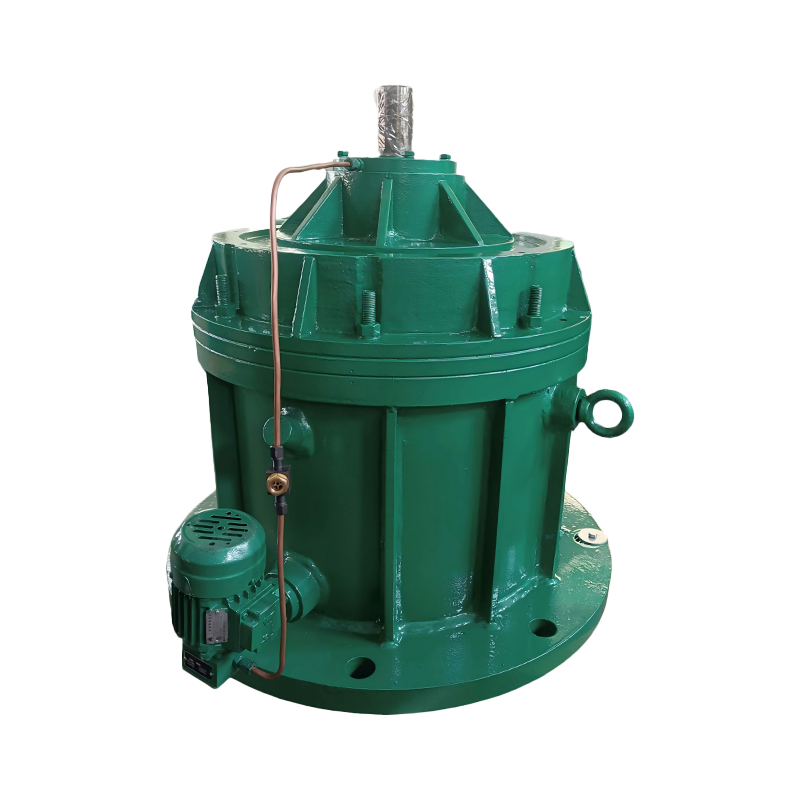
A double-reduction worm gear reducer houses two separate worm-and-wheel meshes in a single housing, with the output shaft of the first stage driving the worm of the second stage. This allows overall ratios of 100:1 to over 3,600:1 within a relatively compact package. The trade-off is cumulative efficiency loss: if each stage operates at 70% efficiency, the combined unit delivers approximately 70% × 70% = 49% efficiency. According to SGR Heavy Industry, typical efficiency for a double-reduction worm gearbox ranges from 40% to 75% depending on the ratio, and using a planar double-enveloping (globoid) worm gear design can push results toward the higher end.
Q: What is the typical service life of a worm gear reducer?
With correct lubrication, appropriate load sizing, and regular oil changes, a well-specified worm gear reducer can deliver 20,000 hours or more of reliable service. The bronze worm wheel is the primary wear component; its life is most sensitive to operating temperature, lubricant condition, and whether the unit was properly run in. Units that skip the run-in period, operate continuously near their thermal limit, or run with contaminated lubricant typically see bronze wheel life reduced to a fraction of the rated figure.
Q: Are worm gear reducers still relevant when helical-bevel units are more efficient?
Yes, for several reasons. First, cost: worm gear reducers are significantly less expensive to manufacture, and for applications with ratios of 30:1 or below, Machine Design notes that worm units with centre distances of 2 inches or less can offer comparable or better value than helical reducers. Second, self-locking: no helical gear can inherently prevent back-driving the way a single-start worm can. Third, physical packaging: the 90-degree shaft arrangement of a worm gearbox fits spatial layouts that in-line helical units simply cannot accommodate. For applications where these factors outweigh the efficiency penalty, the worm gear reducer remains the most rational and cost-effective engineering choice.
Summary
Worm gear reducers occupy a distinct and irreplaceable position in industrial power transmission by combining extreme single-stage reduction ratios, inherent self-locking at high ratios, right-angle shaft geometry, and competitive unit cost in a single robust package. Their efficiency, which ranges from roughly 49% at a 300:1 double-reduction ratio to 90% or higher at 5:1 single-stage according to Machine Design, is the central trade-off that governs where they are the optimal choice and where helical alternatives are preferable.
For engineers and procurement teams, the decision framework is clear: choose a worm gear reducer when the application demands a high ratio, a 90-degree shaft layout, self-locking behavior, or a low initial budget — and specify the lubrication, run-in procedure, and thermal management carefully to ensure the unit reaches its full rated service life. Recognising that worm gear efficiency is highly ratio-dependent, as noted by Winsmith Engineering Manager Rob Holdsworth in Machine Design, and matching the design accordingly, is the foundation of every successful worm gear reducer application.