 English
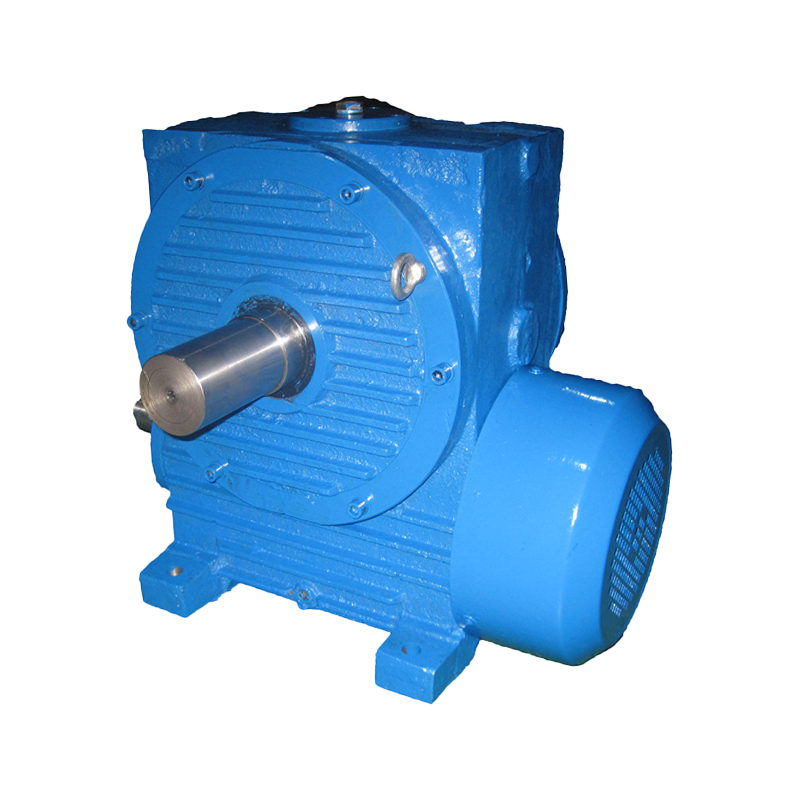
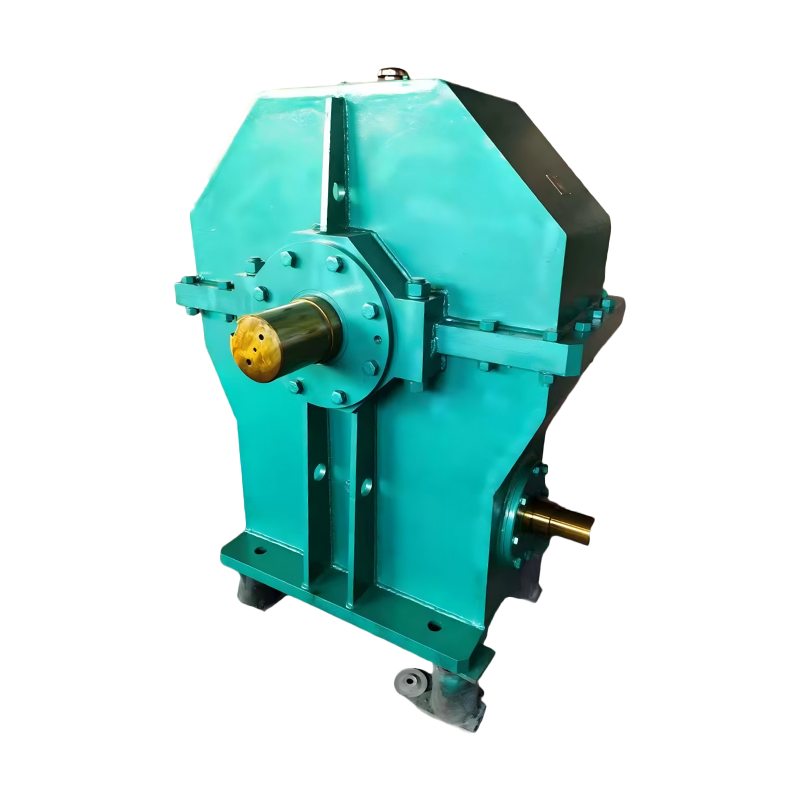
Worm Gear Reducer
A worm gear reducer is a type of speed reducer that achieves power transmission through the meshing of a worm and a worm wheel. Its core structure consists of a worm (usually the driving component) and a worm wheel (usually the driven component). Through sliding friction between the two, it converts the high speed of a motor into low speed while delivering high torque. Compared with other types of reducers, such as planetary gear reducers or spur gear reducers, worm gear reducers have the advantages of a large transmission ratio (the single-stage transmission ratio typically ranges from 5:1 to 100:1, and even higher ratios can be achieved with multi-stage transmission), compact structure, smooth operation, and low noise. Particularly notable is that, due to its specific friction-based transmission, a worm gear reducer can exhibit self-locking under certain conditions, meaning that it can effectively prevent the load from driving the input shaft in reverse when power is cut off, thus providing a natural safeguard for system safety. Although its transmission efficiency is usually lower than that of other gear reducers, it remains an indispensable solution in applications with limited space that require high reduction ratios with right-angle transmission. [eos]

Contact us
-
Factory Address
No. 10, Taiyao North Road, Yaowang Town, Taixing City, Jiangsu Province, China
-
Phone
86-139 5115 9007
Copyright © TAIXING REDUCER CO., LTD. 苏ICP备2022046133号 Rights Reserved.
