 English
 中文简体
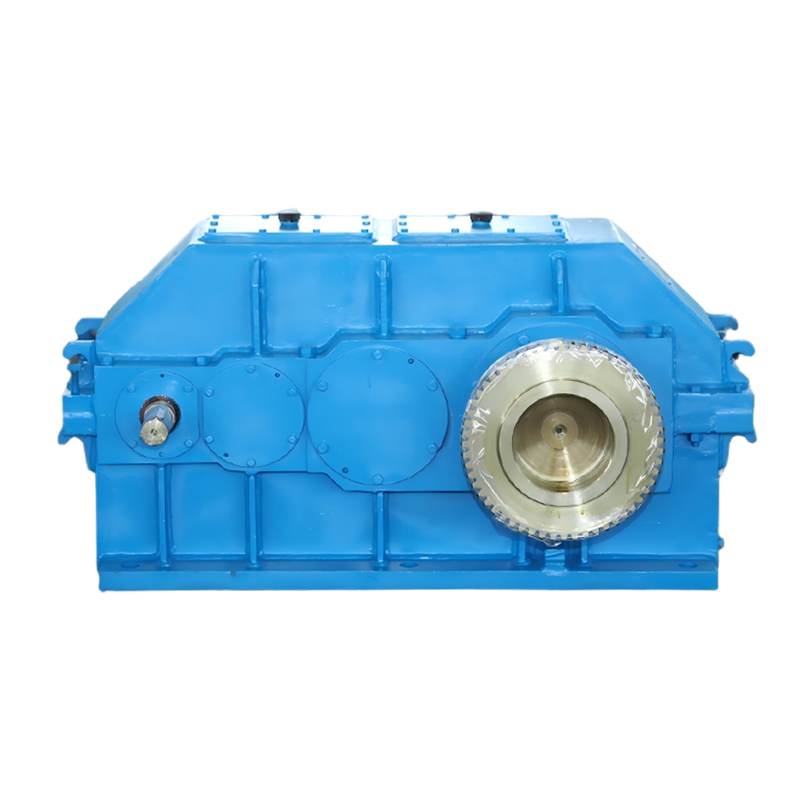
中文简体An industrial gear reducer — also called a gearbox or speed reducer — is a mechanical power transmission device that uses a system of interlocking gears to reduce the rotational speed of an input shaft while proportionally increasing its output torque. In practical terms: if a motor spins too fast and produces too little turning force for a given application, an industrial gear reducer converts that high-speed, low-torque output into the lower speed and higher torque that the load actually requires. According to the Global Gear Reducer Market Report 2023, the worldwide industrial gear reducer market was valued at approximately USD 22.4 billion in 2022 and is projected to exceed USD 35 billion by 2030, reflecting the technology's indispensability across manufacturing, mining, energy, and logistics sectors.
Content
- 1 What Is an Industrial Gear Reducer and How Does It Work?
- 2 What Are the Main Types of Industrial Gear Reducers?
- 3 Industrial Gear Reducer Types: Full Comparison
- 4 How to Select the Right Industrial Gear Reducer: 6 Critical Parameters
- 5 Where Are Industrial Gear Reducers Used?
- 6 How to Maintain an Industrial Gear Reducer for Maximum Service Life
- 7 Why Industrial Gear Reducers Are Evolving: Key Industry Trends
- 8 Frequently Asked Questions About Industrial Gear Reducers
- 9 Conclusion: Choosing the Right Industrial Gear Reducer
What Is an Industrial Gear Reducer and How Does It Work?
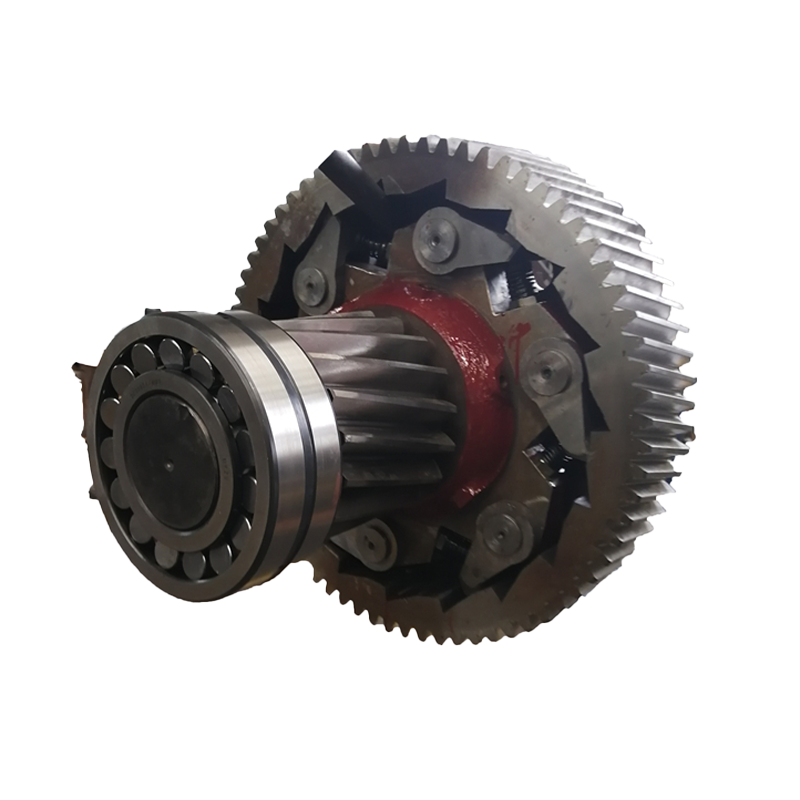
An industrial gear reducer works by transmitting rotational power through a series of meshed gear pairs, each pair reducing output speed and multiplying output torque by a factor determined by the ratio of the number of teeth on the driving and driven gears.
The fundamental physics is governed by the gear ratio, which is the ratio of the number of teeth on the output gear to the number of teeth on the input gear:
If the input gear has 20 teeth and the output gear has 100 teeth, the gear ratio is 5:1. A motor running at 1,500 RPM connected to this reducer produces an output of 300 RPM — and because power is conserved (minus friction losses), the output torque is five times the input torque. This is the core value proposition of every industrial gear reducer: trading rotational speed for torque, matching motor output to load requirement.
In multi-stage reducers, this process is repeated across two, three, or more gear pairs in series, enabling very high overall gear ratios — up to 1,000:1 or beyond — within a compact housing. Each additional stage multiplies the ratio: a two-stage unit with 5:1 per stage achieves an overall ratio of 25:1; a three-stage achieves 125:1.
Power In = Power Out + Friction Losses. No gear reducer creates torque from nothing — it converts speed into torque with efficiency losses typically ranging from 1% to 5% per gear stage. A well-maintained helical gear stage achieves 97% to 98% efficiency; a worm gear stage may achieve only 50% to 90% depending on the lead angle and lubrication.
What Are the Main Types of Industrial Gear Reducers?
There are six primary types of industrial gear reducers, each with distinct advantages in terms of efficiency, gear ratio range, load capacity, and physical footprint. Selecting the wrong type for an application is one of the most costly engineering mistakes in power transmission system design.
1. Helical Gear Reducer
Helical gear reducers are the most widely used type in heavy industrial applications due to their high efficiency (96%–98% per stage), smooth and quiet operation, and ability to handle high torque loads. Unlike spur gears, whose teeth engage in full-face contact simultaneously (causing vibration and noise), helical gears have teeth cut at an angle to the gear axis. This means teeth engage gradually across their length, distributing load over a larger contact area and dramatically reducing noise and vibration.
Typical applications include conveyors, mixers, crushers, extruders, and steel mill drives — environments where continuous high-load operation demands maximum efficiency and minimum heat generation. Gear ratios of 2:1 to 10:1 per stage are common, with multi-stage units achieving 100:1 or higher.
2. Worm Gear Reducer
Worm gear reducers deliver the highest single-stage gear ratios — commonly 5:1 to 100:1 — in an extremely compact footprint, making them ideal for space-constrained applications requiring high torque output from limited installation space. A worm gear consists of a screw-like worm shaft meshing with a worm wheel; the helical geometry of the mesh means the worm can turn the wheel, but the wheel cannot back-drive the worm under most conditions, providing a natural braking effect that is valuable in lifting, hoisting, and indexing applications.
The significant trade-off is efficiency: worm gear reducers typically operate at 50% to 90% efficiency depending on the gear ratio and lead angle, with higher ratios producing lower efficiency. A 100:1 worm reducer may achieve only 50% to 60% efficiency — meaning up to 40% to 50% of input power is lost as heat. This limits their use in high-power, continuous-duty applications where energy costs are significant.
3. Bevel Gear Reducer
Bevel gear reducers are the preferred choice when the direction of power transmission must change — typically by 90 degrees — between the input and output shafts. They use cone-shaped gears whose teeth are cut on the conical surface. Straight bevel gears are simpler and less expensive; spiral bevel gears (with curved teeth, analogous to helical gears) are smoother, quieter, and more load-capable.
Typical applications include printing presses, material handling equipment, differentials, and right-angle drives for conveyors and mixers. Spiral bevel reducers achieve 97%–99% efficiency per stage — among the highest of any gear type.
4. Planetary Gear Reducer
Planetary gear reducers deliver the highest power density of any gear reducer type — meaning the most torque per unit of size and weight — making them the preferred choice for robotics, aerospace, servo drives, and any application demanding extreme compactness with high torque capability. A planetary gear set consists of a central sun gear, three or more planet gears that orbit the sun gear, a ring gear (annulus) that encircles the planet gears, and a carrier that connects the planet gear axes.
Because the load is shared equally across multiple planet gears rather than a single mesh point, planetary reducers handle significantly higher torques than similarly sized parallel-shaft units. Efficiency typically ranges from 95% to 98% per stage. Gear ratios of 3:1 to 10:1 per stage are common, with multi-stage units achieving 100:1 or more.
5. Cycloidal Gear Reducer
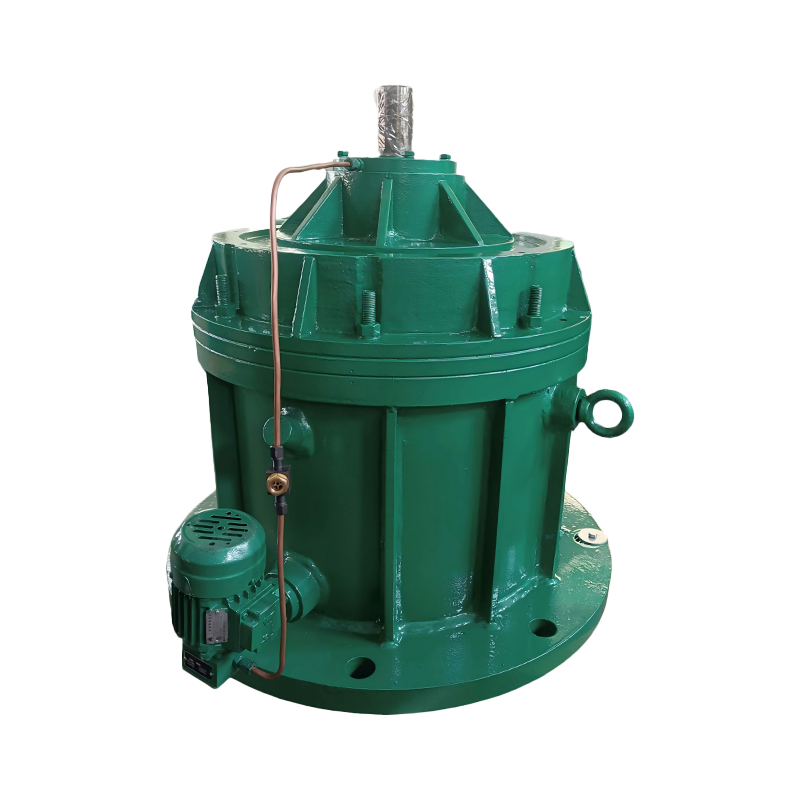
Cycloidal reducers achieve extremely high gear ratios (up to 119:1 in a single stage) with exceptionally high shock load tolerance — up to 500% overload capacity — making them ideal for applications with severe, unpredictable impact loads. They use an eccentric cam and a cycloidal disc rather than conventional meshing teeth, which gives them near-zero backlash and very high torsional rigidity. Typical applications include heavy stamping presses, forging equipment, and mining machinery.
6. Parallel Shaft (Spur) Gear Reducer
Parallel shaft spur gear reducers are the simplest and lowest-cost gear reducer type, suitable for light-to-medium industrial duty at lower speeds where noise is not a critical concern. Their straight-cut teeth engage all at once, which creates some noise and vibration, but also makes them inexpensive to manufacture and easy to maintain. Common applications include agricultural equipment, light conveyor drives, and auxiliary drives in general manufacturing.
Industrial Gear Reducer Types: Full Comparison
The table below compares all six major industrial gear reducer types across eight key performance and application parameters, providing a quick reference for engineers and procurement teams selecting the right reducer for a given application.
| Type | Efficiency | Ratio Range (Single Stage) | Torque Capacity | Noise Level | Relative Cost | Best Application |
| Helical | 96–98% | 2:1 to 10:1 | Very High | Low | Medium | Conveyors, mixers, mills |
| Worm | 50–90% | 5:1 to 100:1 | Medium–High | Very Low | Low | Hoists, packaging, lifts |
| Bevel | 97–99% | 1:1 to 6:1 | High | Low–Medium | Medium–High | Right-angle drives, presses |
| Planetary | 95–98% | 3:1 to 10:1 | Very High | Low | High | Robotics, servo systems |
| Cycloidal | 90–95% | Up to 119:1 | Extremely High | Very Low | Very High | Impact loads, forging, mining |
| Spur (Parallel Shaft) | 94–98% | 1:1 to 6:1 | Low–Medium | High | Very Low | Light conveyors, agriculture |
Table: Comprehensive comparison of six industrial gear reducer types by efficiency, ratio range, torque capacity, noise, cost, and primary application. Source: AGMA (American Gear Manufacturers Association) Technical Standards, 2022.
How to Select the Right Industrial Gear Reducer: 6 Critical Parameters
Selecting the right industrial gear reducer requires matching six interdependent engineering parameters to the specific demands of the application — getting even one wrong can result in premature failure, excessive energy consumption, or inadequate output performance.
Calculate the required ratio by dividing the motor's rated output speed (RPM) by the desired output shaft speed. For example, a 1,450 RPM motor driving a conveyor that requires an output speed of 58 RPM needs a gear ratio of 25:1. Add a 10–15% safety margin to account for load fluctuations.
Output torque (Nm) = (Motor Power in Watts × 9.55) / Output Speed (RPM). The selected reducer must have a rated output torque at least 15% to 25% higher than this calculated value to ensure adequate service life under variable load conditions. The AGMA recommends a minimum service factor of 1.25 for uniform loads and 2.0 or higher for heavy shock loads.
A reducer running continuously at full load generates more heat than one running intermittently. Every reducer has a thermal power rating (the maximum continuous power it can dissipate without overheating) in addition to its mechanical torque rating. In continuous duty applications, the thermal rating often governs selection rather than the mechanical rating — particularly for worm gear reducers, where frictional heat generation is highest.
Industrial gear reducers are available in foot-mounted, flange-mounted, shaft-mounted, and hollow-bore configurations. The choice depends on how the reducer interfaces with the drive motor and the driven equipment, available installation space, and whether the motor and reducer will be integrated as a motor-reducer unit or connected via coupling.
Ambient temperature, humidity, dust, corrosive chemicals, and vibration all influence reducer selection and specification. Food-grade applications require stainless steel housings and FDA-approved lubricants. Outdoor or wash-down environments require IP65 or higher ingress protection. High-temperature environments (above 50°C ambient) may require external cooling systems or synthetic high-temperature lubricants.
Backlash is the angular play between the input and output shafts when the direction of rotation is reversed. Standard industrial reducers have backlash of 15 to 30 arc-minutes, which is acceptable for most conveyor and mixer drives. Servo and positioning applications — robotics, CNC machines, pick-and-place systems — require precision reducers with backlash below 5 arc-minutes, or zero-backlash planetary or cycloidal designs.
Where Are Industrial Gear Reducers Used?
Industrial gear reducers are foundational components in virtually every sector of heavy industry, with the global installed base numbering in the hundreds of millions of units across power generation, mining, manufacturing, food processing, and infrastructure.
| Industry Sector | Typical Application | Preferred Reducer Type | Key Requirement |
| Mining and Minerals | Conveyor drives, ball mills, crushers | Helical, cycloidal | Shock load tolerance, long service life |
| Food and Beverage | Mixers, fillers, packaging lines | Helical, worm (food-grade) | Hygienic design, wash-down rating |
| Wind Energy | Wind turbine gearboxes | Planetary, helical | High reliability, minimal maintenance access |
| Robotics and Automation | Servo axes, joint drives | Planetary, cycloidal | Low backlash, high positioning accuracy |
| Cement and Construction | Kiln drives, bucket elevators | Helical, bevel-helical | Extreme load capacity, dust resistance |
| Marine and Offshore | Winches, thrusters, anchor windlasses | Worm, planetary | Corrosion resistance, self-locking |
| Oil and Gas | Pump drives, compressors, drilling | Helical, bevel | Explosion-proof rating, high reliability |
Table: Industrial gear reducer applications by sector, preferred gear type, and primary engineering requirement. Source: International Federation of Robotics (IFR) and AGMA Market Data, 2023.
How to Maintain an Industrial Gear Reducer for Maximum Service Life
Proper maintenance extends industrial gear reducer service life from a typical 5 to 10 years to 20 years or more — and prevents the catastrophic unplanned downtime events that industrial maintenance surveys consistently rank as the most costly form of equipment failure. According to a 2022 study by the Plant Engineering Research Institute, unplanned drivetrain failures cost manufacturing facilities an average of USD 250,000 per incident when lost production and emergency repair costs are combined.
- Lubrication management: The single most impactful maintenance activity for any industrial gear reducer is maintaining the correct lubricant type, level, and change interval. Most reducers require oil changes every 2,000 to 5,000 operating hours under normal conditions, or every 1,000 hours in high-temperature or contaminated environments. Using the wrong viscosity grade can reduce bearing and gear life by up to 50%. Always refer to the manufacturer's lubrication specification — ISO VG 220 is the most common grade for helical and bevel reducers; ISO VG 460 is typical for worm reducers.
- Oil analysis and contamination monitoring: Sending oil samples to a laboratory for particle count analysis every 3 to 6 months is one of the most cost-effective predictive maintenance practices available. An increase in iron, copper, or tin particles in the oil indicates wear of gears, bearings, or bushings respectively — typically providing 2 to 4 months of warning before failure. Water contamination above 0.1% volume reduces lubricant film strength by up to 80%.
- Vibration analysis: Accelerometers mounted on the reducer housing enable continuous or periodic monitoring of vibration signatures. Gear mesh frequency analysis can detect developing gear tooth damage; bearing frequency analysis identifies bearing degradation. Vibration-based condition monitoring typically provides 30 to 90 days of advance warning before bearing failure, allowing scheduled replacement rather than emergency breakdown maintenance.
- Thermal monitoring: Operating temperature significantly above the design point indicates overloading, insufficient lubrication, or bearing wear. Infrared thermometers or permanently mounted temperature sensors enable rapid identification of thermal anomalies. A rule of thumb: for every 10°C (18°F) increase in operating temperature above the rated point, lubricant life is halved and bearing life is reduced by approximately 50%.
- Seal inspection and replacement: Shaft seals prevent lubricant leakage and contamination ingress. Leaking seals should be replaced immediately — a minor seal leak costs very little to fix but, if ignored, leads to lubricant starvation and catastrophic gear or bearing failure within weeks.
Why Industrial Gear Reducers Are Evolving: Key Industry Trends
Three major forces are reshaping industrial gear reducer design and selection: the global push for energy efficiency, the growth of industrial automation and robotics, and the adoption of Industry 4.0 digital monitoring technologies.
Energy Efficiency Regulations
The European Commission's Ecodesign Regulation (EU) 2019/1781 and equivalent regulations in North America and Asia are driving a shift toward higher-efficiency gear reducer designs. Since motor-driven systems — of which gear reducers are a central component — account for approximately 70% of industrial electricity consumption (IEA, 2022), even a 2% improvement in average gear reducer efficiency across the industrial installed base translates to billions of kilowatt-hours of annual energy savings globally.
Robotics and Collaborative Automation
The rapid growth of industrial robotics — the IFR reported a record 553,000 industrial robots installed worldwide in 2022, a 5% increase over 2021 — is creating surging demand for compact, low-backlash, high-precision planetary and cycloidal gear reducers. Collaborative robots (cobots) in particular require gear reducers with near-zero backlash, very high torsional stiffness, and integration-ready servo interfaces.
Smart Gear Reducers and IIoT Integration
Industry 4.0 is transforming gear reducers from passive mechanical components into intelligent, connected nodes in manufacturing digital networks. Smart gear reducers incorporate embedded temperature sensors, vibration accelerometers, and oil condition monitors that transmit data via industrial protocols (IO-Link, OPC-UA, EtherNet/IP) to plant-level monitoring systems. This enables real-time condition monitoring, predictive maintenance scheduling, and integration with digital twin platforms — fundamentally changing the economics of gear reducer maintenance from time-based to condition-based.
Frequently Asked Questions About Industrial Gear Reducers
Conclusion: Choosing the Right Industrial Gear Reducer
An industrial gear reducer is not a commodity component — it is a precision mechanical system whose correct selection, installation, and maintenance directly determines the reliability, efficiency, and operating cost of the drive system it serves. With the global market projected to surpass USD 35 billion by 2030, investment in understanding gear reducer technology pays dividends both in engineering performance and in procurement decisions.
The selection process always begins with four numbers: required output speed, required output torque, motor input speed, and motor input power. From these, gear ratio and torque rating are calculated. The application environment, duty cycle, mounting constraints, backlash requirements, and service factor then determine which of the six gear types — helical, worm, bevel, planetary, cycloidal, or spur — delivers the optimal combination of performance, longevity, and total cost of ownership for your specific application.
- AGMA (American Gear Manufacturers Association) — Technical Standards and Market Data, 2022–2023
- International Energy Agency (IEA) — Energy Efficiency in Industry Report, 2022
- International Federation of Robotics (IFR) — World Robotics Report, 2023
- European Commission — Ecodesign Regulation (EU) 2019/1781, Motor Systems
- Global Gear Reducer Market Report — Market Research Future, 2023
- Plant Engineering Research Institute — Unplanned Drivetrain Failure Cost Study, 2022