 English
 中文简体
Content
- 1 What Is a 90 Degree Gear Reducer?
- 2 Worm vs. Bevel: Two Main Designs for a 90 Degree Reducer
- 3 How to Choose the Right 90 Degree Gear Reducer
- 4 Where 90 Degree Gear Reducers Are Used
- 5 Why Machining Quality and Reducer Construction Matter
- 6 90 Degree Gear Reducer FAQ
- 7 Final Advice for Choosing a 90 Degree Gear Reducer
What Is a 90 Degree Gear Reducer?
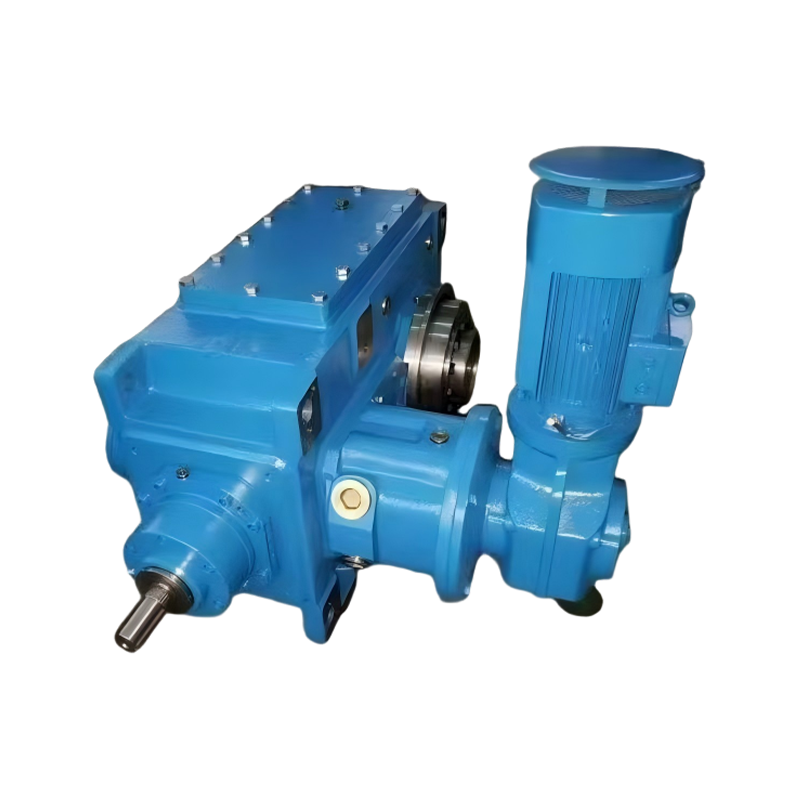
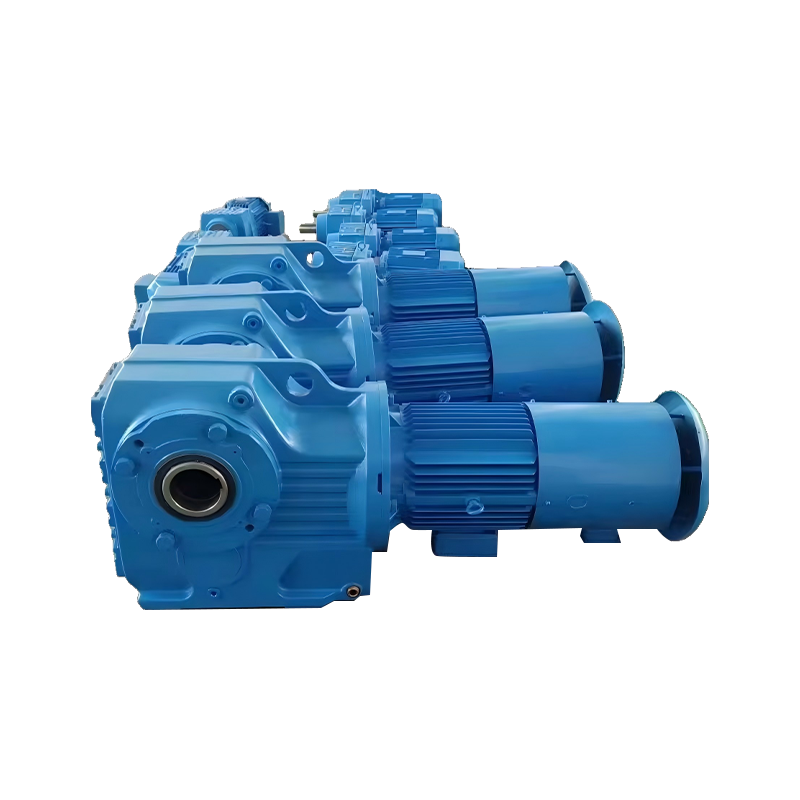
A 90 degree gear reducer is a speed-reducing gearbox that changes the direction of power transmission by exactly 90 degrees, usually through worm or bevel gearing. It takes an input shaft rotating at one speed and delivers a lower output speed at a shaft positioned at right angles to the input, while multiplying torque.
Right-angle reducers are used wherever the motor is mounted perpendicular to the driven shaft. This is common in conveyors, hoists, elevators, gate drives, material handling equipment, mixers, and industrial machinery where floor space or shaft access dictates a compact drive package.
Benefits you get from a quality 90 degree gear reducer include:
- Speed reduction and torque increase in a single unit.
- A compact envelope that fits machines with tight geometry.
- Simplified motor mounting in horizontal or vertical orientations.
- Reduced number of belts, chains, or additional transfer gears.
- Positive, predictable ratio with minimal maintenance when correctly selected.
Worm vs. Bevel: Two Main Designs for a 90 Degree Reducer
Worm gear reducers are the most common 90 degree gear reducers because one worm and worm-wheel set both changes direction and provides a high ratio. Bevel gear units use spiral or straight bevel teeth to turn the shaft with far less friction, but they require more attention to mounting and backlash.
The table below compares the primary characteristics you will see on reducer specification sheets.
| Feature | Worm gear reducer | Bevel gear reducer |
|---|---|---|
| Shaft arrangement | Input and output shafts at 90 degrees, often with no additional offset | Input and output shafts at 90 degrees using a bevel gear pair |
| Single-stage ratio | 5:1 to around 100:1 | Usually 1:1 to about 5:1 per stage |
| Efficiency | 40 to 85 percent, depending on ratio and sliding speed | 95 to 98 percent per mesh |
| Noise | Quiet to moderate, especially at low speed | Low noise with precision ground teeth |
| Backlash | Can be low, but accuracy depends on worm wheel machining | Can be very low if ground and preloaded |
| Self-locking | Possible at high ratios | Not self-locking |
| Cost | Generally lower for the same ratio | Higher, especially with hardened and ground teeth |
| Typical use | Conveyors, hoists, gates, mixers, packaging | Machine tools, automatic drives, drives with high dynamic loads |
Before comparing prices, it is useful to review how industrial gear reducers work and which type fits your machine.
Worm reducers: the practical right-angle solution
A worm reducer can provide single-stage ratios from roughly 5:1 to 100:1. That makes it an excellent choice when you need strong speed reduction along with a 90 degree change. Worm drives also tolerate shock loads better than some alternatives and can be designed with self-locking behaviour at higher ratios, meaning the output cannot easily back-drive the input.
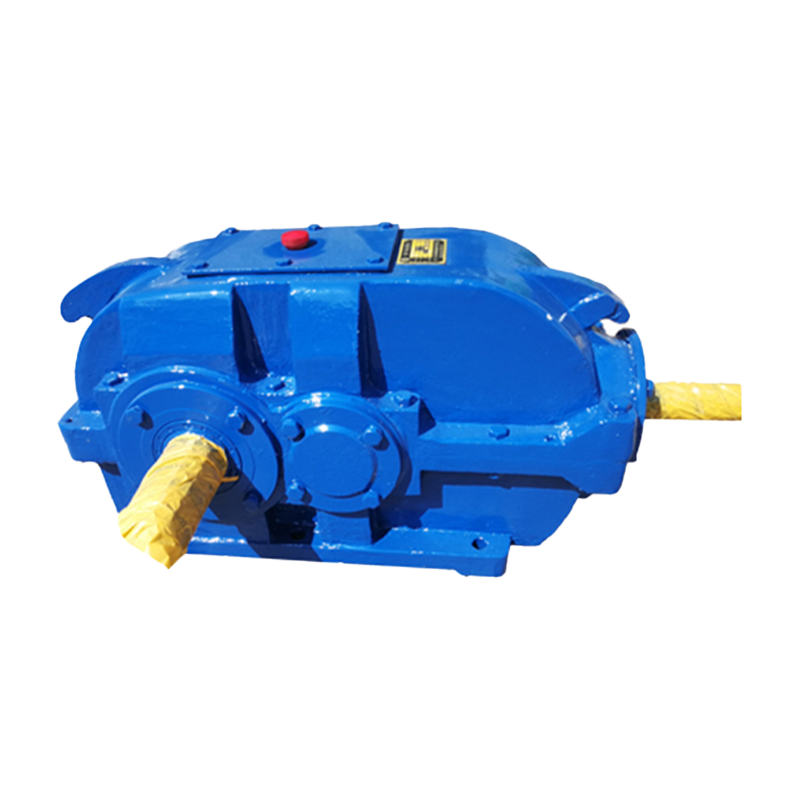
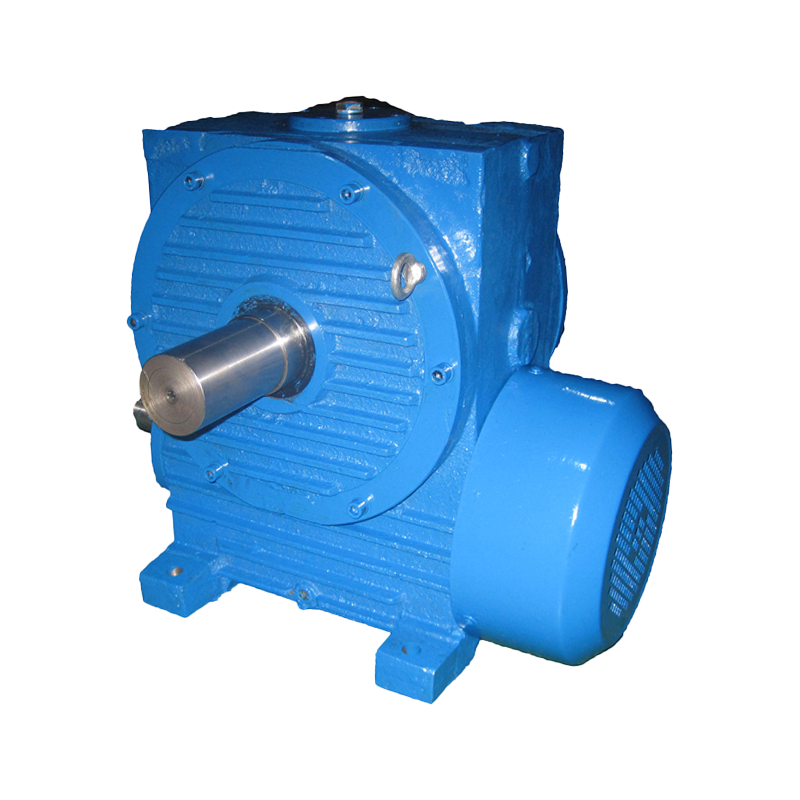
 Single-Enveloping Worm Gear Reducer for Compact High-Ratio DrivesThis reducer increases tooth contact area over conventional cylindrical designs, improving load capacity and efficiency. It suits small to medium power systems needing large ratios and compact mounting, with smooth, low-noise operation and self-locking capability.View Product →
In practice, single-enveloping worm gear reducers are suited to general industrial drives where ratio, simplicity, and first cost are more important than maximum efficiency. Common examples are conveyor drives, adjusting mechanisms, small hoists, and rotating gates.
When higher torque is needed, a double-enveloping worm reducer increases the contact area between the worm and wheel. It can carry more load in the same frame size and offers better stiffness, though it also costs more.
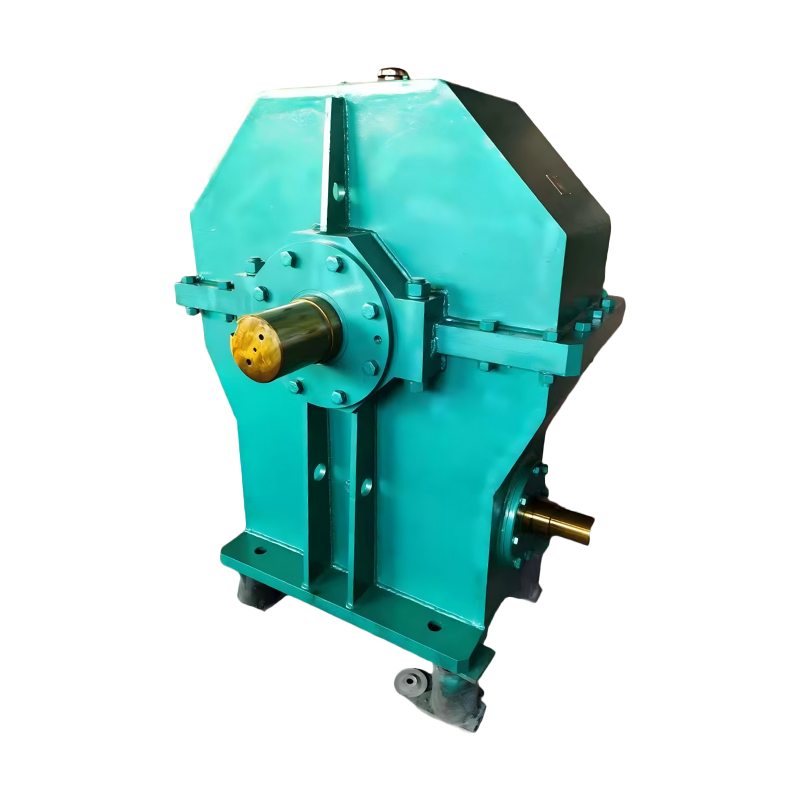
 Double-Enveloping Worm Gear Reducer for Heavy-Duty Precision ApplicationsWith over 30% more tooth contact area, this reducer delivers higher torque and load capacity in the same size. It offers reduced backlash, longer service life, and better tolerance for misalignment, making it ideal for precise, low-speed heavy-load industrial use.View Product →
Bevel reducers: higher efficiency for continuous duty
Bevel gear reducers achieve roughly 95 to 98 percent efficiency per stage and are preferred where the machine runs continuously, where energy cost is significant, or where precise motion control is needed. The downside is that a bevel stage usually has a low single-stage ratio, so you often need a multistage reducer to get both a large ratio and a 90 degree output.
How to Choose the Right 90 Degree Gear Reducer
Selecting a 90 degree gear reducer starts with defining four numbers: required ratio, input speed, output torque, and service factor. Efficiency, thermal limits, mounting position, and enclosure protection then narrow the candidate list.
Define ratio and output speed
The ratio is based on the motor speed and the required output speed. A worm reducer can reach high ratios in one stage, while a bevel reducer may need a second reduction stage. If your target speed is close to the motor speed, a bevel right-angle drive can be the cleaner solution.
Check torque and service factor
Do not size the reducer by power alone. Calculate the output torque from the machine's working resistance and multiply it by a service factor, often 1.25 to 2.0, based on duty cycle and shock level. Worm reducers need a generous safety margin because their torque rating is sensitive to heat and running hours.
Efficiency and thermal limits
Efficiency is not a single number. It changes with ratio, speed, oil temperature, and load. A 20:1 worm stage may be around 80 percent efficient, while a 60:1 stage can drop below 60 percent. The lost power becomes heat, so an enclosed reducer needs enough housing area and cooling to keep the oil temperature below roughly 90 degrees Celsius. For hot environments or continuous service, consider a fan or a larger frame.
Mounting, shaft orientation, and enclosure
Confirm whether the output shaft should point up, down, left, or right. Many worm reducers accept different mounting positions, but oil level and breathing change with orientation. Also check the housing ingress protection, for example IP55 versus IP65, when the reducer will be installed outdoors, in washdown areas, or in dusty plants.
Keep in mind common worm gear application difficulties such as thermal rise, back-driving conditions, and lubrication practice. A small error at the specification stage can shorten bearing life or cause premature tooth wear.
Where 90 Degree Gear Reducers Are Used
The main reason to use a 90 degree gear reducer is to move the motor away from the driven shaft while reducing speed. It is a standard component in many industries and applications.
- Conveyor and material handling: conveyor drive stations, belt feeders, and screw conveyors.
- Hoisting and lifting: small hoists, elevator drives, gate hoists, and winches.
- Mixers and agitators: vertically mounted mixers that need a right-angle input from a horizontal motor.
- Processing equipment: granulators, extruders, packaging lines, and similar machinery.
- Valve and gate actuation: penstocks, sluice gates, and other quarter-turn devices.
- Precision machinery: indexing tables and machine tool rotary axes, often with bevel reducers.
Why Machining Quality and Reducer Construction Matter
A 90 degree gear reducer can look identical in catalogue drawings, but operating life changes dramatically with material grade, heat treatment, tooth surface finish, and bearing quality. Worm gear performance depends heavily on the worm wheel material and the accuracy of the enveloping geometry.
When buying from a maker such as Taixing Reducer Co., Ltd., ask about the gear material, manufacturing process, and inspection results. A manufacturer with large profile grinding machines, gear hobbers, and CNC machining centers can control the tooth geometry that determines noise and torque ratings.
For a right-angle worm reducer, also ask:
- Is the worm wheel made from a high-grade phosphor bronze alloy or a cheaper substitute?
- Are the bearings selected for radial and thrust load at the actual ratio?
- How is the housing tested for leaking and thermal deformation?
- What is the noise level at your operating speed?
- Is a coupling or motor adapter included in the dimensional drawing?
90 Degree Gear Reducer FAQ
Can a 90 degree gear reducer be back-driven?
It depends. A bevel reducer can normally be back-driven. A worm reducer becomes non-reversing at high ratios because friction exceeds the force that the output wheel can transmit back to the worm. The threshold depends on ratio, lubricant, and lead angle, so never assume self-locking without checking the manufacturer's data.
What is the efficiency difference between worm and bevel 90 degree reducers?
A single worm stage is 40 to 85 percent efficient depending on ratio, while a bevel stage is 95 to 98 percent efficient. For continuous duty, the efficiency difference can make bevel the lower lifetime cost even when its purchase price is higher.
Can I mount the motor on top of a 90 degree gear reducer?
Yes. Many right-angle worm reducers are configured with a motor on top, driving the worm shaft vertically, while the output shaft is horizontal. This is a popular arrangement for conveyors and mixers. The same unit may also be mounted with a horizontal input shaft.
How do I determine rotation direction?
For a worm reducer, rotation direction depends on the hand of the worm and the relative position of the input and output shafts. Standard configurations are left-hand or right-hand output. Check the dimensional drawing and the direction arrows stamped on the housing before ordering.
What service factor should I use for a right-angle gear reducer?
For steady loads and eight-hour duty, use at least 1.25. For shock loads, reversing loads, or 24-hour operation, use 1.5 to 2.0. Worm reducers often need a higher service factor than helical units because their torque rating falls as operating temperature rises.
Final Advice for Choosing a 90 Degree Gear Reducer
The right 90 degree gear reducer starts with an accurate definition of ratio, torque, duty, and mounting constraints. Worm reducers give you the simplest path to high ratios and right-angle layout; bevel reducers give you higher efficiency and precision. Supply the complete operating data, check the manufacturer's test standards, and choose a housing with enough thermal capacity for the actual running profile.