 English
 中文简体
中文简体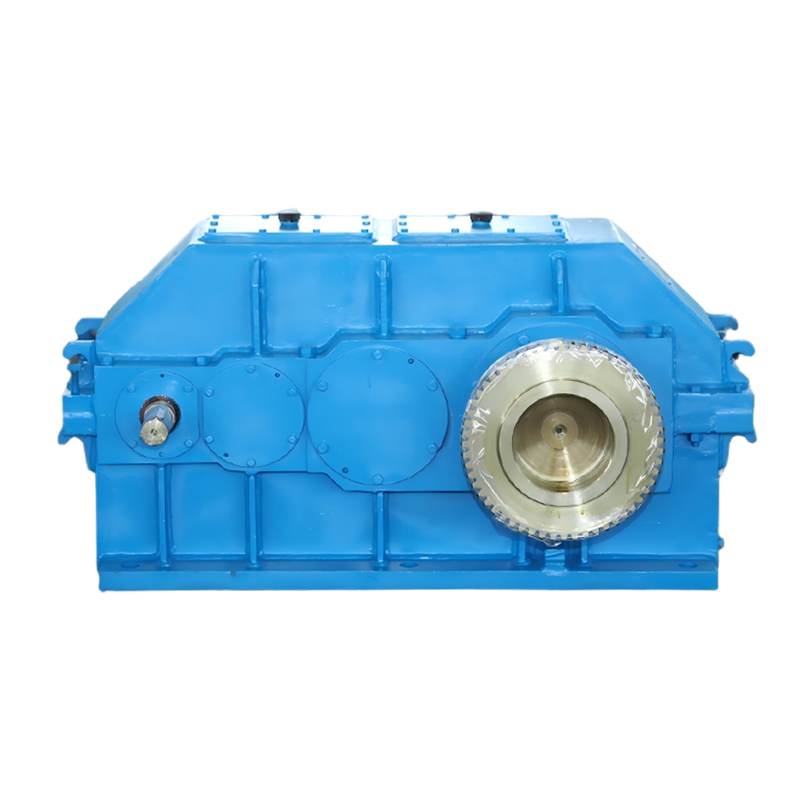
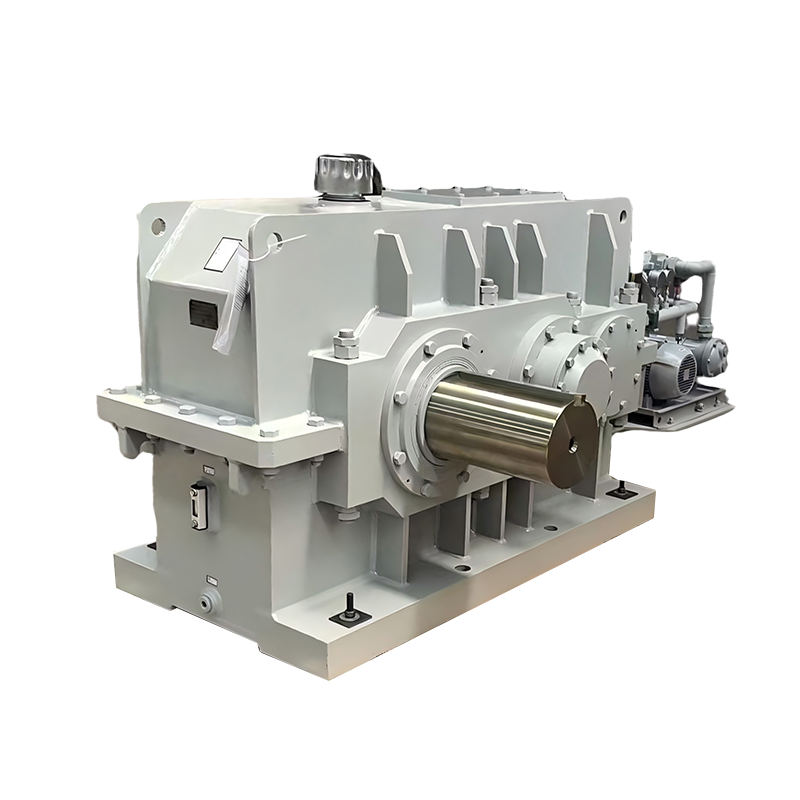
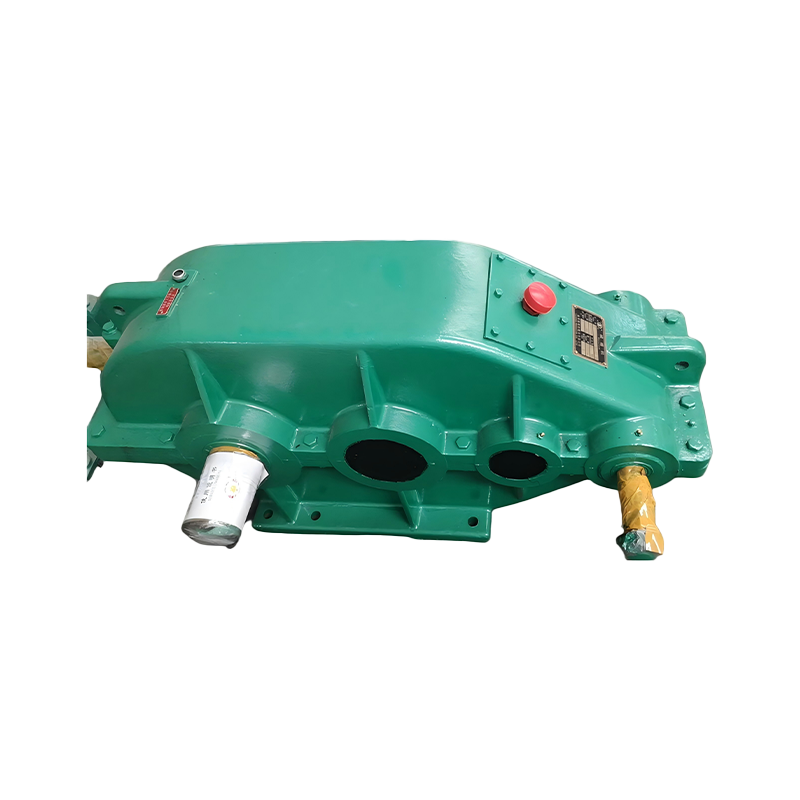
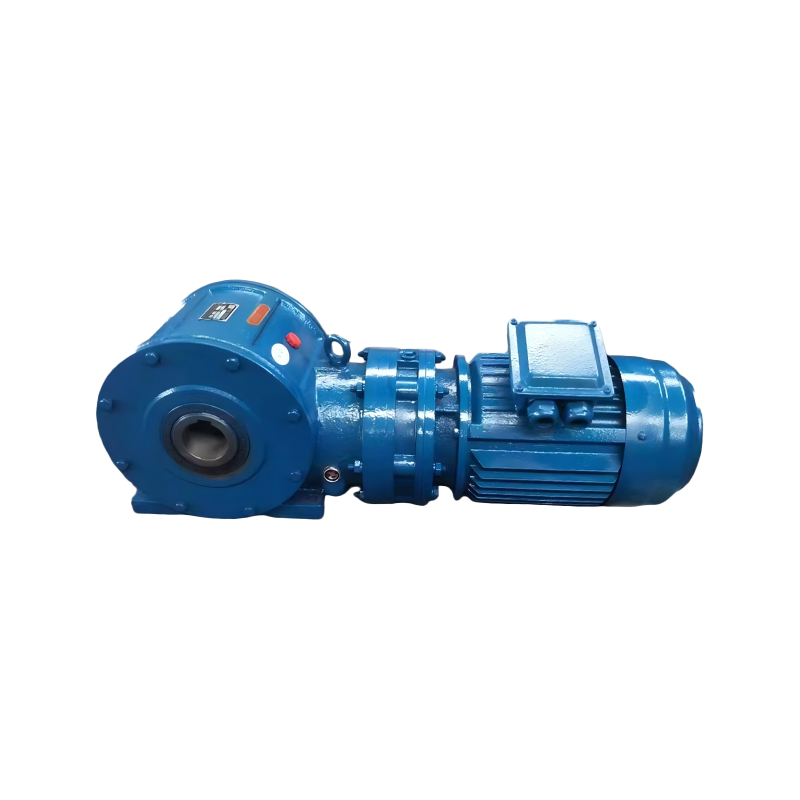
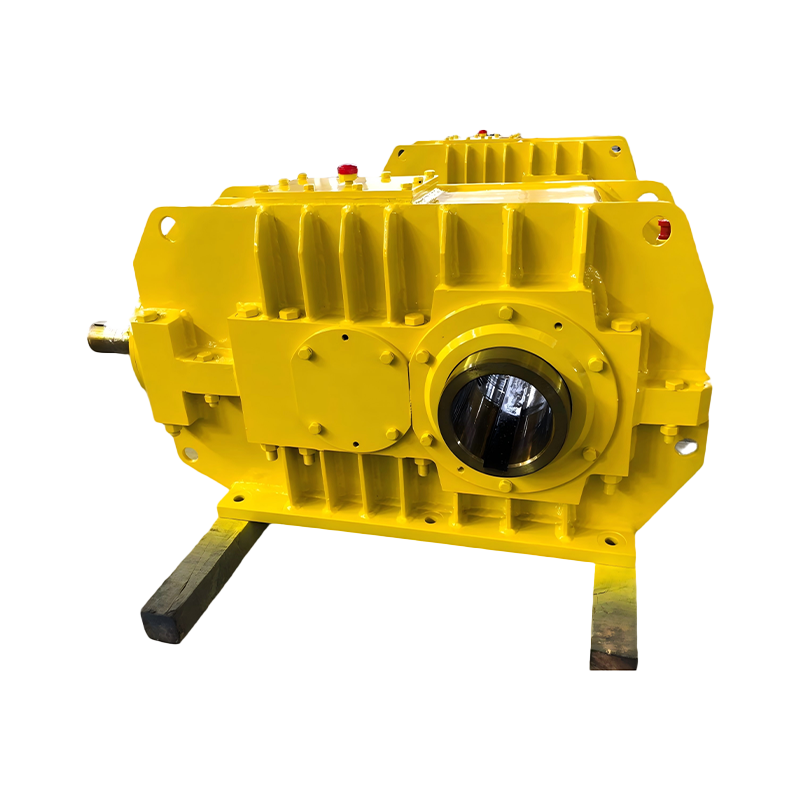
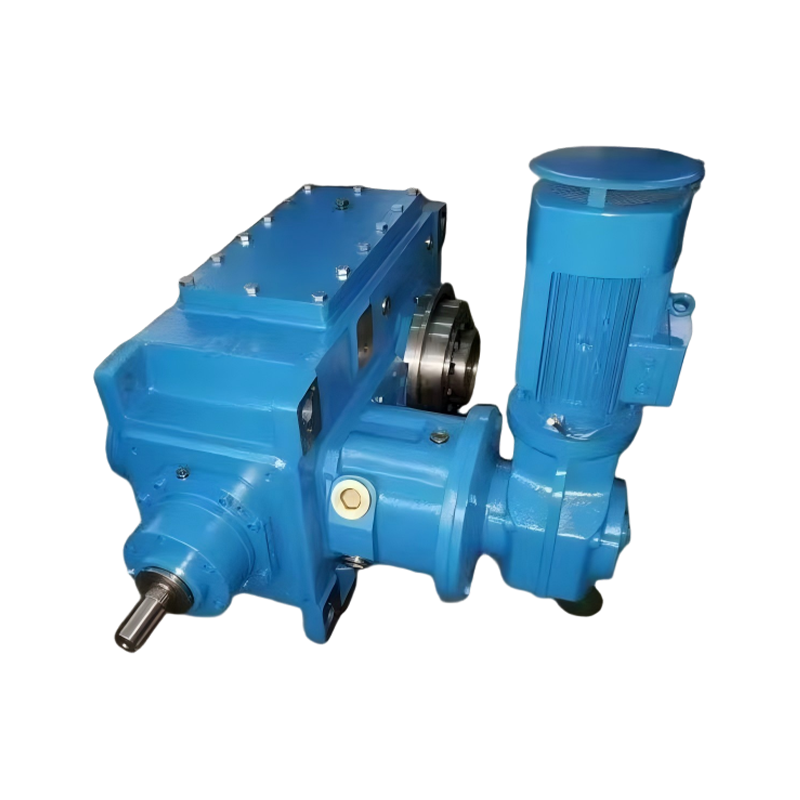
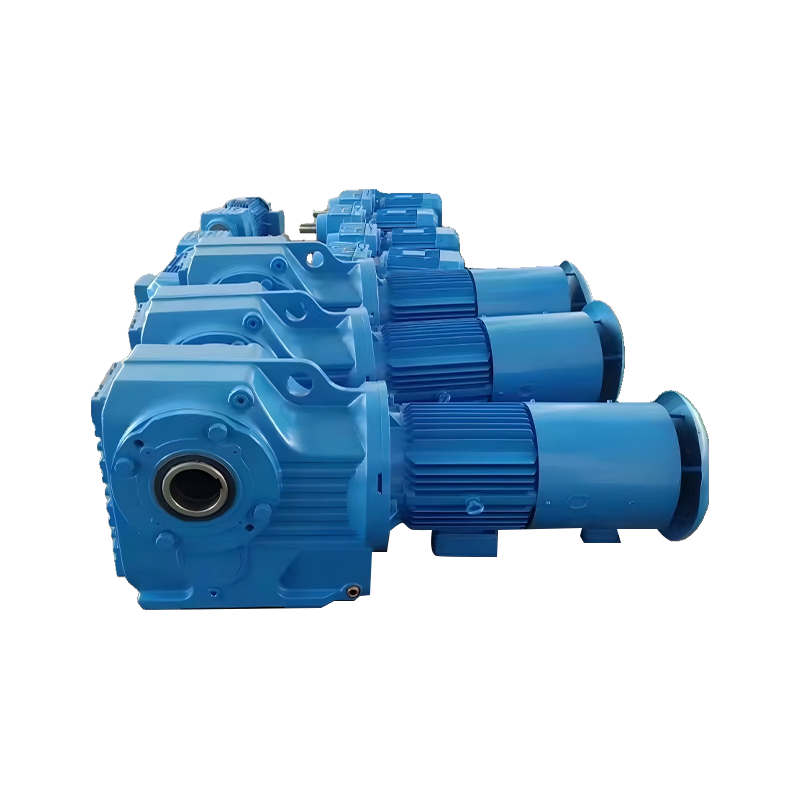
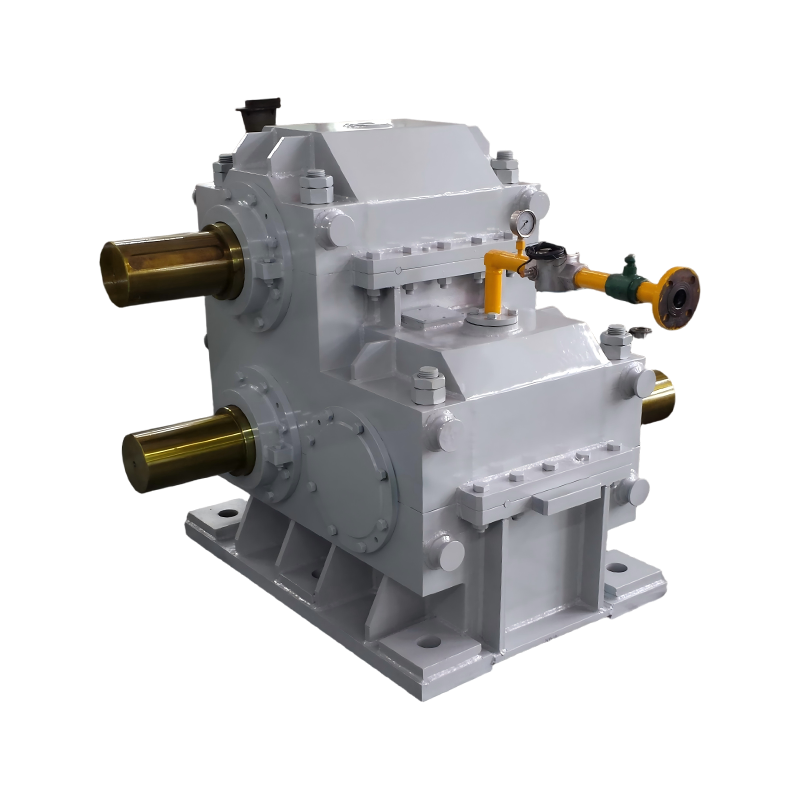
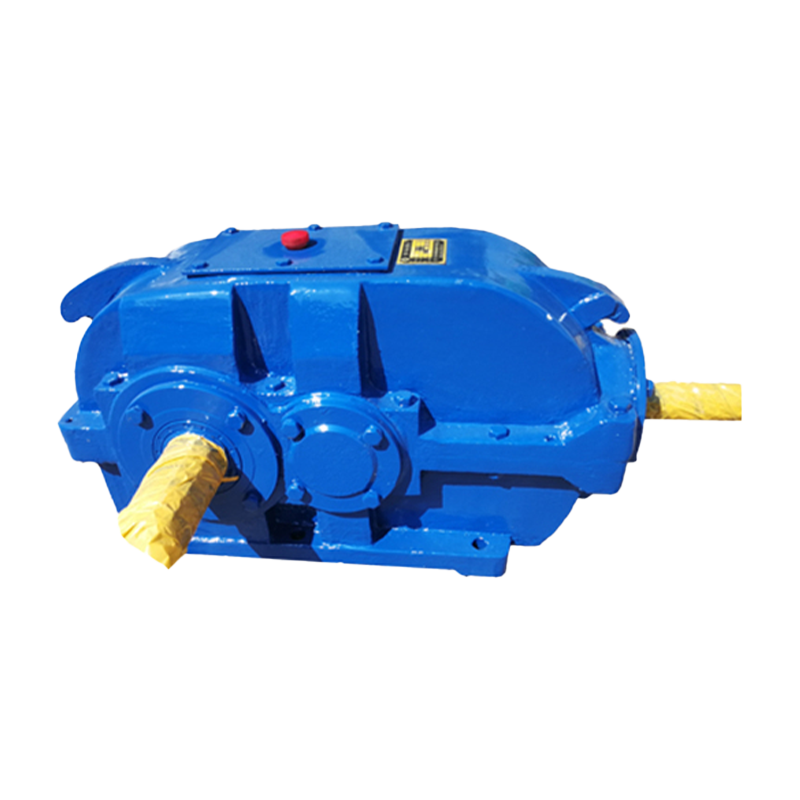
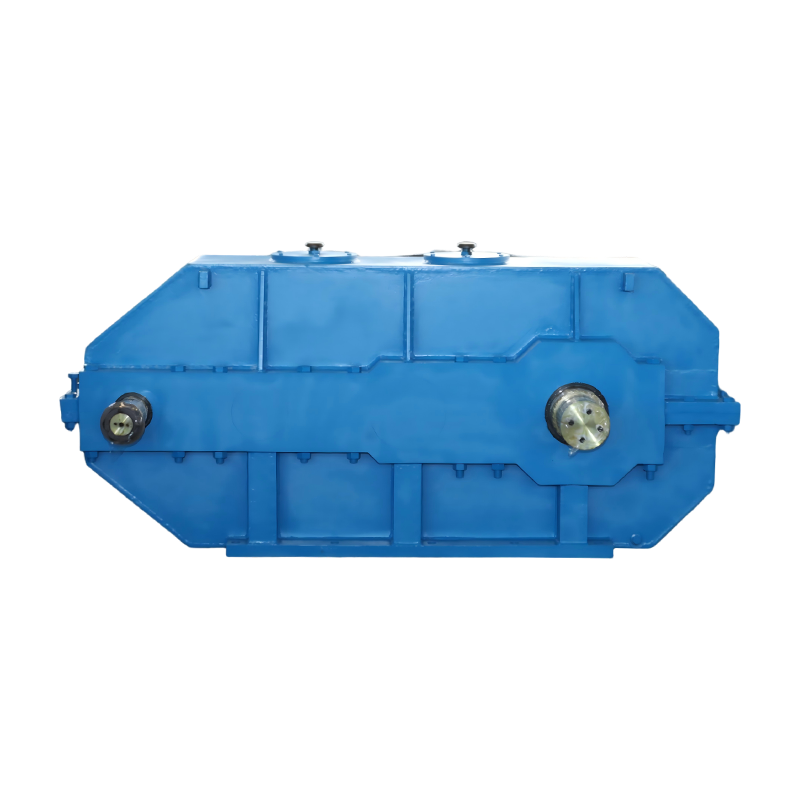
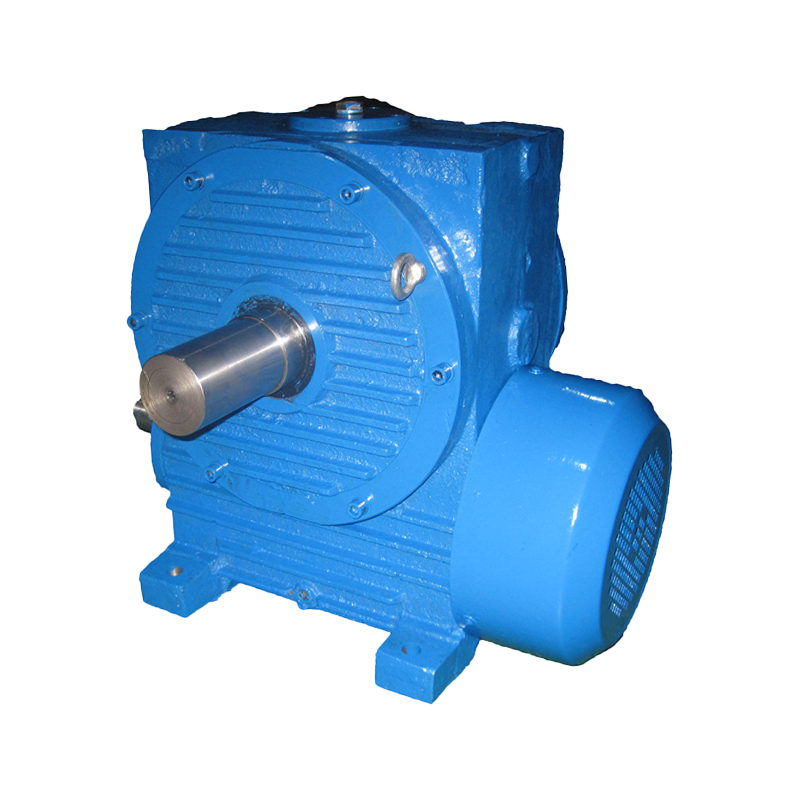
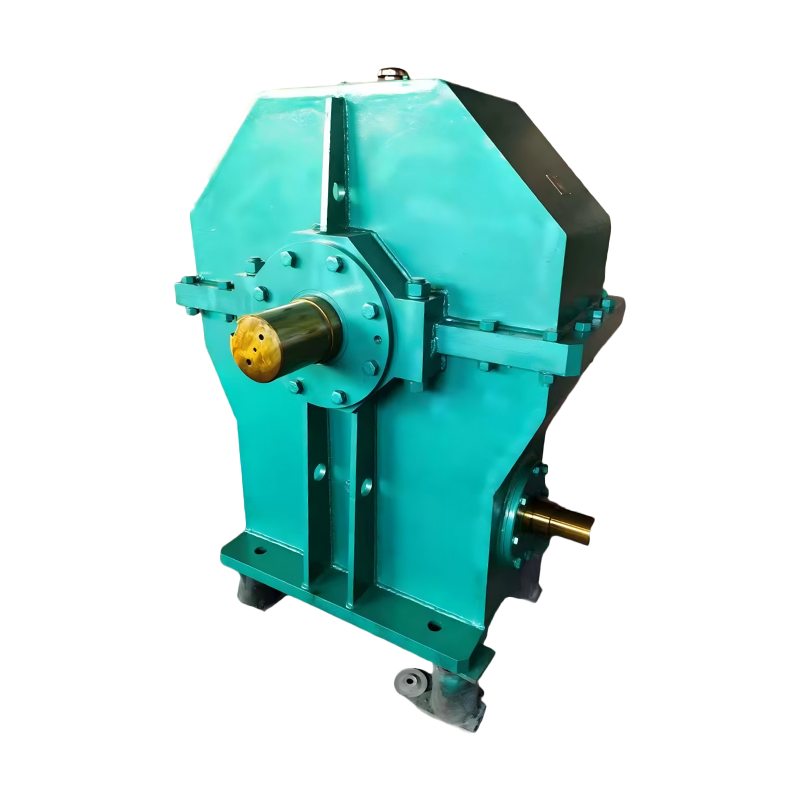
As a China Industrial Gear Reducer Manufacturer and Custom Industrial Gear Reducer Supplier, Taixing Reducer Co., Ltd. was founded in 1984 and is a specialized manufacturer dedicated to the research, development, and production of industrial gear reducers. The company covers an area of 300,000 m², with fixed assets of RMB 380 million and more than 2,000 employees, including 186 engineering and technical professionals. With decades of manufacturing experience, Taixing has developed strong capabilities in reducer design, production, and application integration, providing reliable transmission solutions for a wide range of industrial sectors.
Advanced Manufacturing
Taixing continuously invests in advanced production equipment and technologies. The company has introduced high-precision machinery from Germany, Russia, and the United States, including large gear grinding machines, gear hobbing machines, vertical lathes, and CNC machining centers. To meet the growing demand for large-scale reducers, the company has also installed equipment such as 3-meter gear grinding machines, 3.2-meter gear hobbing machines, and large-scale boring and milling centers, ensuring high precision and stable product performance.
Product Strength
As a specialized reducer manufacturer, Taixing offers 16 major product series and more than 10,000 specifications, with an annual production capacity of 200,000 units. The company focuses on product innovation and quality control, achieving a 99.8% customer satisfaction rate. Its products are designed to meet high industry standards, ensuring low noise, high efficiency, and reliable operation. Several independently developed reducers, including the TXP, NBD, NCD, and three-ring series, have gained strong recognition from the market.
Quality & Brand Commitment
The company strictly controls product quality and production processes to ensure every reducer meets high reliability and durability standards. The Taixing brand reducer has been widely recognized in China and has been used in numerous key national projects and large industrial enterprises.
Customer-Oriented Philosophy
Through continuous innovation and reliable service, Taixing is committed to delivering high-performance reducer solutions and building long-term partnerships with customers worldwide.
Industrial Gear Reducer Manufacturer
About Us
TAIXING REDUCER CO., LTD.
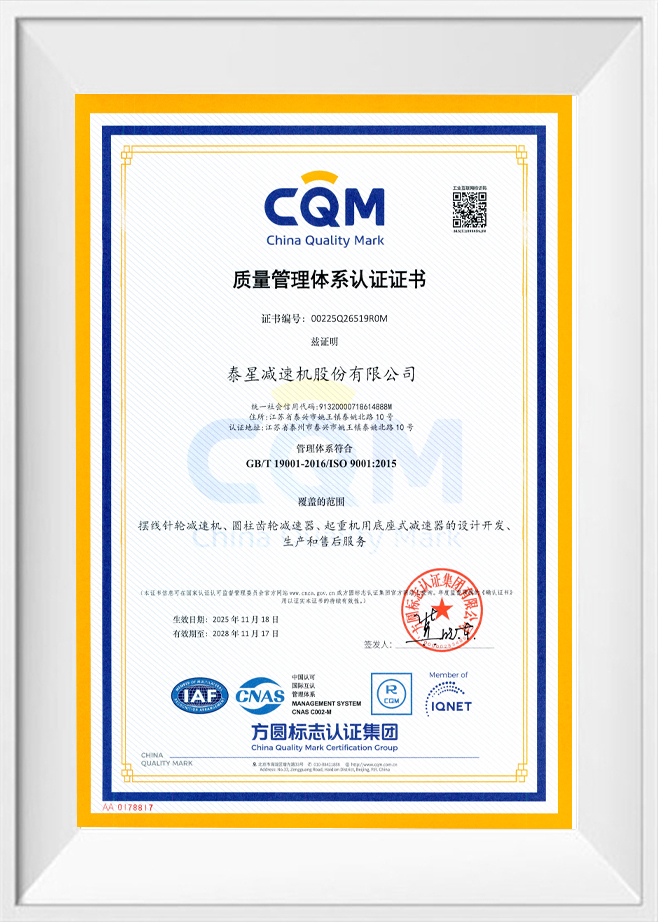
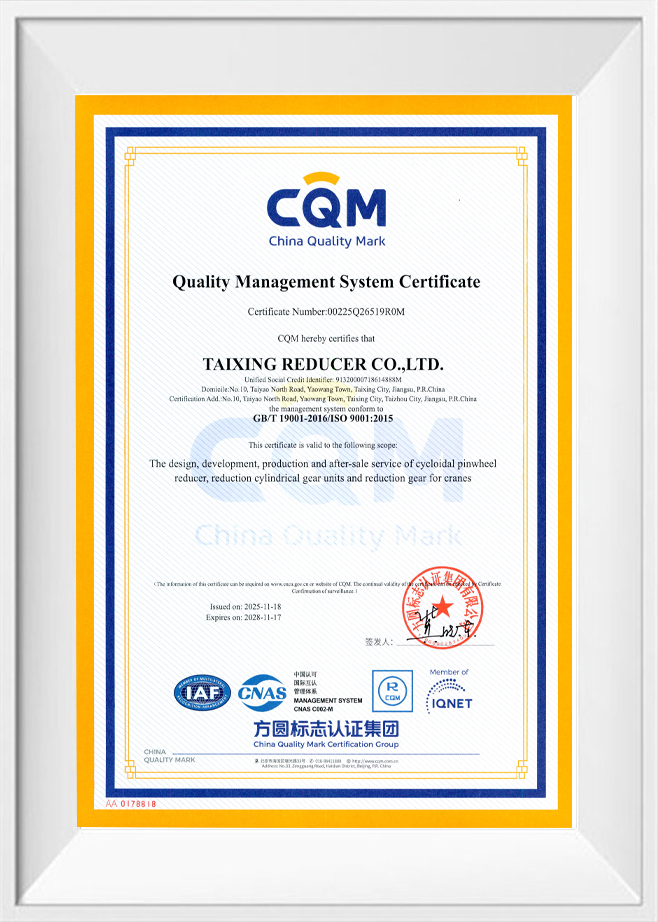
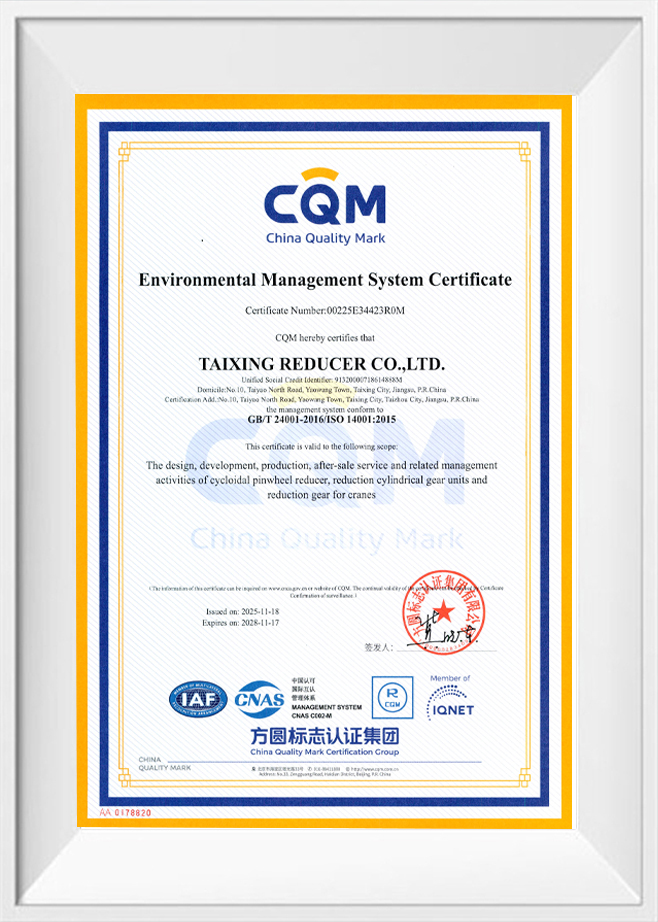
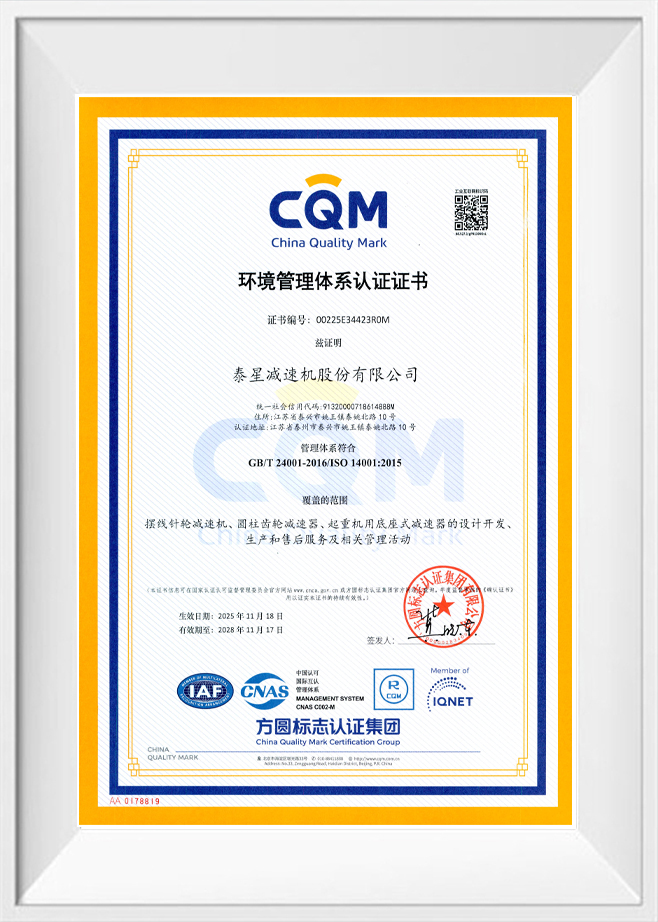
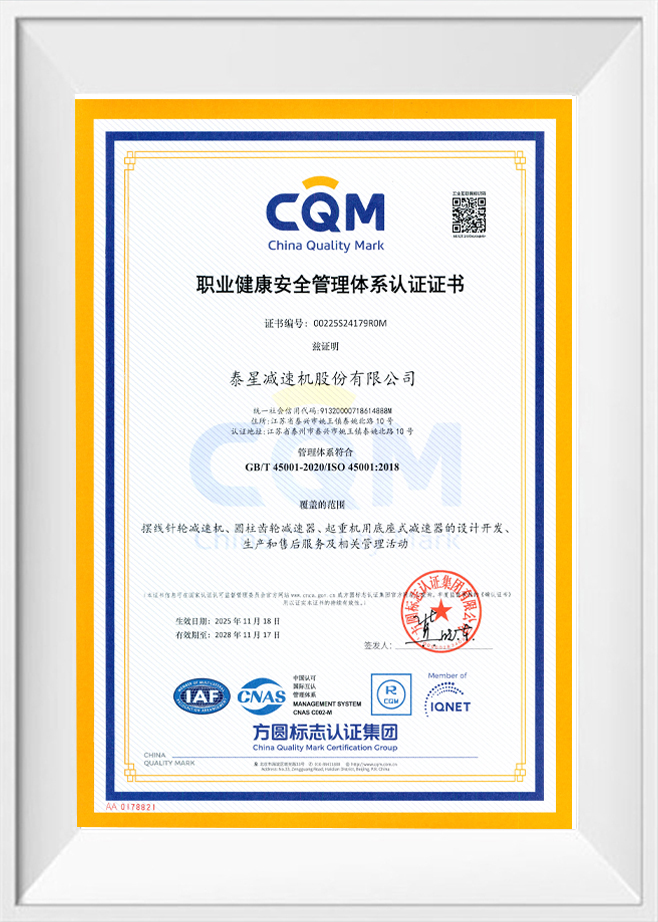
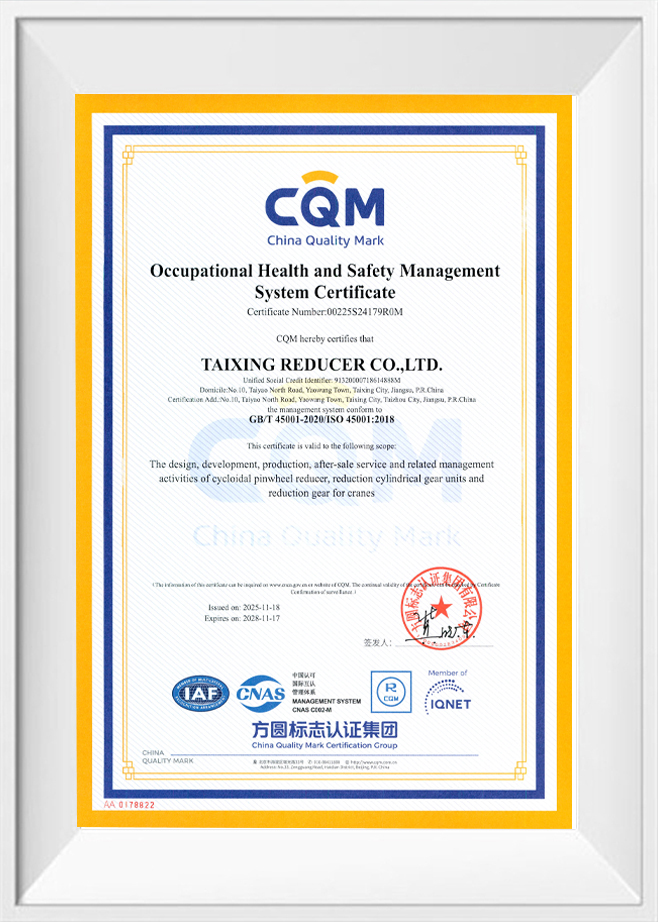
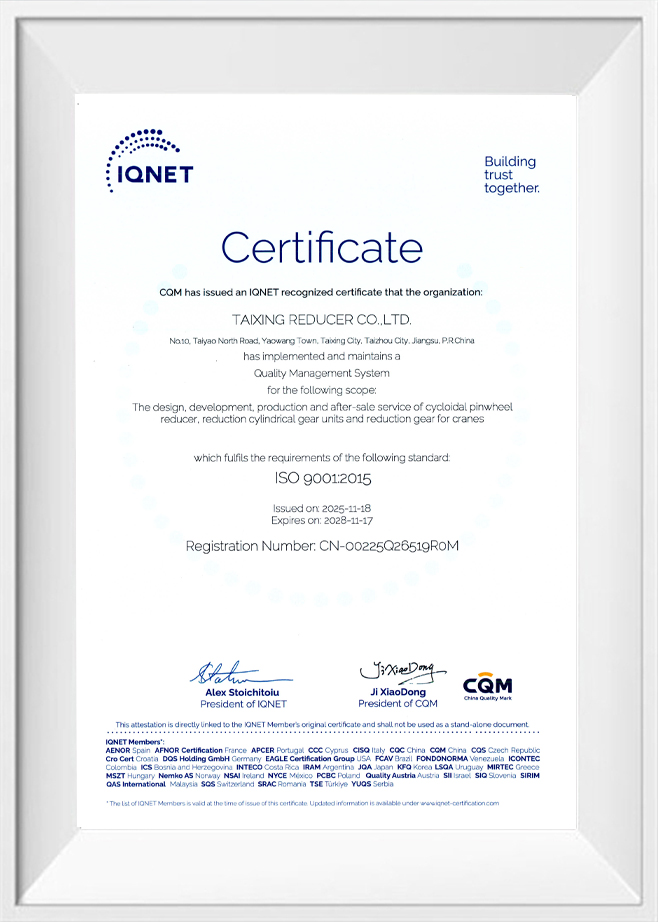
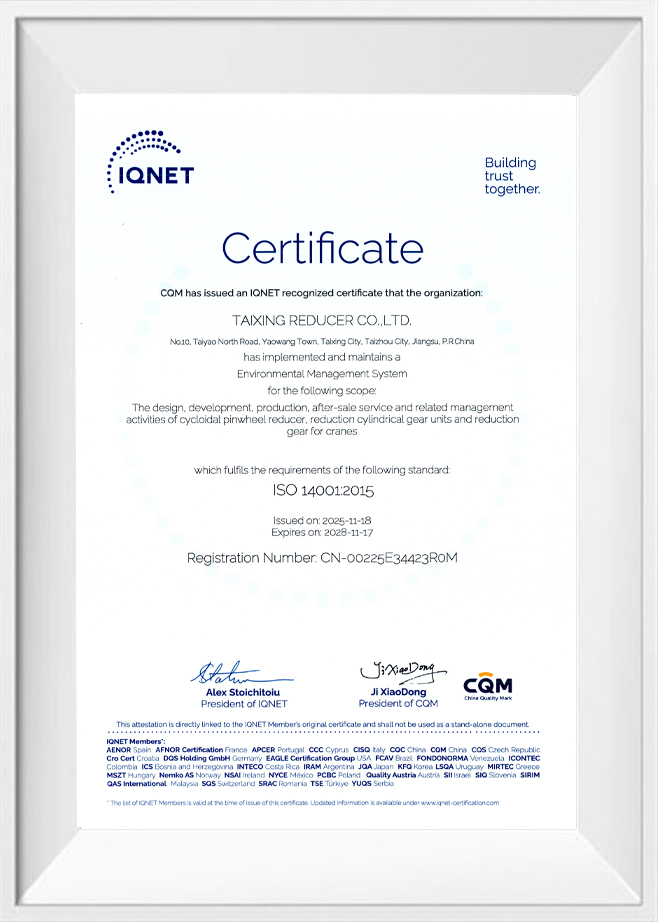
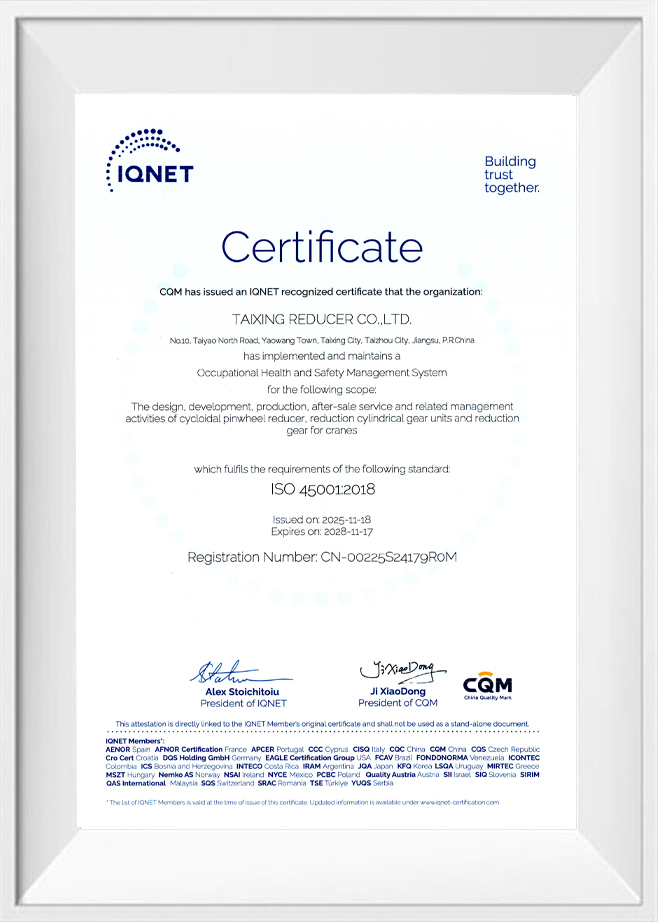
Certificate Of Honor
News
-
Choosing a gear reducer starts with a load number, not a catalog page. The load number is the output torque your drive...
READ MORE -
Your conveyor needs 42 rpm at 5.5 kW, but the catalogue only gives 40 rpm or 45 rpm. The reducer also has to fit behin...
READ MORE -
What Is an Extruder Hardened Gear Reducer? An extruder hardened gear reducer is a heavy-duty speed reducer with case-h...
READ MORE -
What a Right Angle Gear Reducer Is and When to Specify One A design engineer walks along a conveyor line and sees the m...
READ MORE -
To preload a worm gear reducer, you must apply a controlled internal force that eliminates the clearance between the wo...
READ MORE -
Attaching a gear reducer to an electric motor is a fundamental task in mechanical power transmission. The most common a...
READ MORE -
A planetary gear reducer directly enhances robotics performance by multiplying motor torque while maintaining high tors...
READ MORE -
To select the right bearing for a gear reducer, you must match the bearing type and size to the specific radial and axi...
READ MORE
Message Feedback
Products Industry knowledge
What Is an Industrial Gear Reducer
An industrial gear reducer (also called a gear reducer, speed reducer, or gearbox) is a mechanical transmission device that uses meshing gears to reduce the rotational speed of a motor while proportionally increasing output torque. It is a core component in power transmission systems and is widely used to match motor characteristics with the operating requirements of driven equipment such as conveyors, mixers, crushers, and lifting machinery.
At Taixing Reducer Co., Ltd., reducer design and manufacturing have been a core focus since the company's establishment in 1984. Over decades of operation, the company has built engineering capabilities covering reducer design, production, and application integration across a broad range of industrial sectors.
Core Functions
- Speed Reduction: Lowers motor output speed to match the operating speed required by driven equipment.
- Torque Amplification: Increases output torque in proportion to the reduction ratio.
- Load Distribution: Helps distribute mechanical load evenly across the drive train, reducing stress on the motor.
- Direction Change: Certain reducer types, such as bevel or worm gear reducers, can change the direction of rotational transmission.
Common Types of Industrial Gear Reducers
Industrial gear reducers are generally classified by gear arrangement and structural design. The table below summarizes common types and their typical characteristics.
| Type | Gear Arrangement | Typical Characteristics |
| Cylindrical Gear Reducer | Parallel-axis spur or helical gears | High efficiency, suitable for medium to heavy loads |
| Bevel-Helical Gear Reducer | Combination of bevel and helical gears | Allows right-angle shaft arrangement |
| Worm Gear Reducer | Worm and worm wheel | High reduction ratio in a compact structure |
| Planetary Gear Reducer | Sun, planet, and ring gears | Compact size with high torque density |
Typical Application Sectors
Industrial gear reducers are used across many sectors where controlled speed and torque transmission is required. Common application areas include the following.
- Metallurgy and Mining: Used in equipment such as conveyors, crushers, and ball mills, where heavy-duty and large-scale reducers are often required.
- Cement and Building Materials: Applied in rotary kilns, mills, and material handling systems.
- Ports and Material Handling: Used in cranes, hoists, and bulk material conveying systems.
- Power Generation: Applied in cooling towers and auxiliary power plant equipment.
- Chemical and Petrochemical Processing: Used in mixers, agitators, and process equipment.
Key Technical Parameters
When selecting an industrial gear reducer, several technical parameters are generally considered to ensure proper matching with the driven equipment.
| Parameter | Description |
| Reduction Ratio | Ratio between input and output rotational speed |
| Output Torque | Maximum torque the reducer can deliver at the output shaft |
| Input Power | Rated power capacity of the connected motor |
| Service Factor | Safety margin accounting for load variation and operating conditions |
| Mounting Configuration | Foot-mounted, flange-mounted, or shaft-mounted arrangement |
Manufacturing Considerations
Manufacturing precision has a direct effect on the performance, noise level, and service life of a gear reducer. Key manufacturing factors include gear-cutting accuracy, heat treatment quality, and assembly tolerances.
Taixing Reducer has invested in production equipment to support this requirement, including high-precision machinery sourced from Germany, Russia, and the United States, such as large gear grinding machines, gear hobbing machines, vertical lathes, and CNC machining centers. For large-scale reducer production, the company has also installed equipment including 3-meter gear grinding machines, 3.2-meter gear hobbing machines, and large-scale boring and milling centers, which support the manufacturing of large-module, heavy-duty gear components.
Maintenance Considerations
- Lubrication Management: Regular monitoring of lubricant level, condition, and replacement intervals.
- Vibration and Noise Monitoring: Early detection of abnormal gear or bearing conditions.
- Seal Inspection: Checking for oil leakage at shaft seals and housing joints.
- Temperature Monitoring: Tracking operating temperature to identify potential overload or lubrication issues.
Frequently Asked Questions
How is the correct reducer size determined for an application?
Selection is typically based on required output torque, input power, reduction ratio, and the operating duty cycle of the driven equipment. Environmental conditions, such as ambient temperature and mounting orientation, are also generally factored into the selection process.
What is the difference between a standard and a custom-engineered reducer?
Standard reducers are produced in fixed configurations for common applications, while custom-engineered reducers are designed for specific load, space, or interface requirements. Taixing Reducer's engineering team supports both standard product lines and application-specific design integration based on decades of manufacturing experience.
Why are large-module gear reducers manufactured differently from smaller units?
Large-module reducers require specialized equipment capable of processing larger gear diameters and higher material volumes. This is why dedicated machinery, such as large-scale gear grinding and hobbing machines, is used specifically for this category of production.

Contact us
-
Factory Address
No. 10, Taiyao North Road, Yaowang Town, Taixing City, Jiangsu Province, China
-
Phone
86-139 5115 9007
Copyright © TAIXING REDUCER CO., LTD. Rights Reserved.
China Industrial Gear Reducer Manufacturer Custom Industrial Gear Reducer Supplier